Medium Density Fiberboard - MDF Buying and Usage Guide, MDF FAQ

Author: JINDIWOOD Source: JINDI WOOD Marketing Department Published: 2026-09-04 15:23 更新: 2026-09-22 10:02 Views: 75 约 9 分钟阅读
MDF buying guide MDF FAQ MDF vs particle board MDF eco-friendly grades MDF moisture resistance MDF CNC carving MDF thickness sizes medium density fiberboard FAQ MDF usage guide density board questions
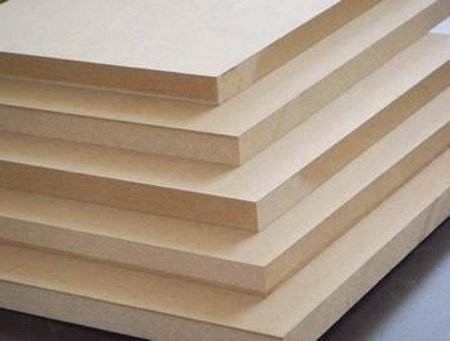
Medium Density Fiberboard - MDF Buying and Usage Guide, MDF FAQ

Medium Density Fiberboard - MDF Buying and Usage Guide, MDF FAQ

Pre-Sales Section

Q1: What is the difference between MDF (Medium Density Fiberboard) and particle board?

A: MDF is made from wood fibers, which are fine and uniform, offering excellent surface flatness and suitability for decorative finishing and fine carving. Particle board is made from wood chips with a granular internal structure, providing good screw holding and better cost-effectiveness. MDF is ideal for decorative panel substrates, door profiles, and carved parts; particle board is suitable for cabinet bodies, shelves, and other structural components.

Q2: What eco-friendly grades are available for MDF? How to identify them?

A: JINDIWOOD MDF offers three eco-friendly grades: E1 (≤ 0.050 mg/m³), E0 (≤ 0.025 mg/m³), and ENF (≤ 0.015 mg/m³). When purchasing, first check whether the product label information is complete, and confirm the product type and formaldehyde emission grade marking. It is recommended to choose a manufacturer with a good brand reputation and avoid products without labels or with a strong irritating odor.

Q3: How is the moisture resistance of MDF? Can it be used in kitchens or bathrooms?

A: Standard MDF has average moisture resistance, with a 24-hour thickness swelling rate ≤ 15%. For humid environments such as kitchens and bathrooms, it is recommended to choose moisture-resistant MDF (24-hour thickness swelling ≤ 10%) with strict edge sealing. Unsealed MDF edges will swell severely after water contact, so it is not recommended for long-term water exposure or outdoor use.

Q4: How does MDF perform in CNC carving and milling?

A: MDF is homogeneous, dense, and isotropic, making it the best material among all wood-based panels for CNC carving and milling. It can be CNC engraved, milled, grooved, and profiled, suitable for door profiles, Roman columns, decorative moldings, crafts, etc. The machined surface is smooth and requires no secondary repair.

Q5: What thickness and sizes are available for MDF?

A: JINDIWOOD MDF thickness ranges from 2 mm to 30 mm, with common thicknesses including 2.5, 3, 4, 5, 6, 8, 9, 12, 15, 18, 22, and 25 mm. Standard size is 1220 × 2440 mm. Custom sizes such as 1220 × 2810 mm, 1220 × 3035 mm, and 1220 × 3660 mm are also available. Thin board density ≥ 830 kg/m³, thick board density ≥ 750 kg/m³, higher than national standard requirements.


Comments (0)

Please login to comment

Login Now
No comments yet. Be the first to comment!
Contact Us
Welcome, we look forward to working with you
WeChatScan to add on WeChat
Mobile+8613145499135
WhatsApp SupportOnline | Usually replies within 1 hour