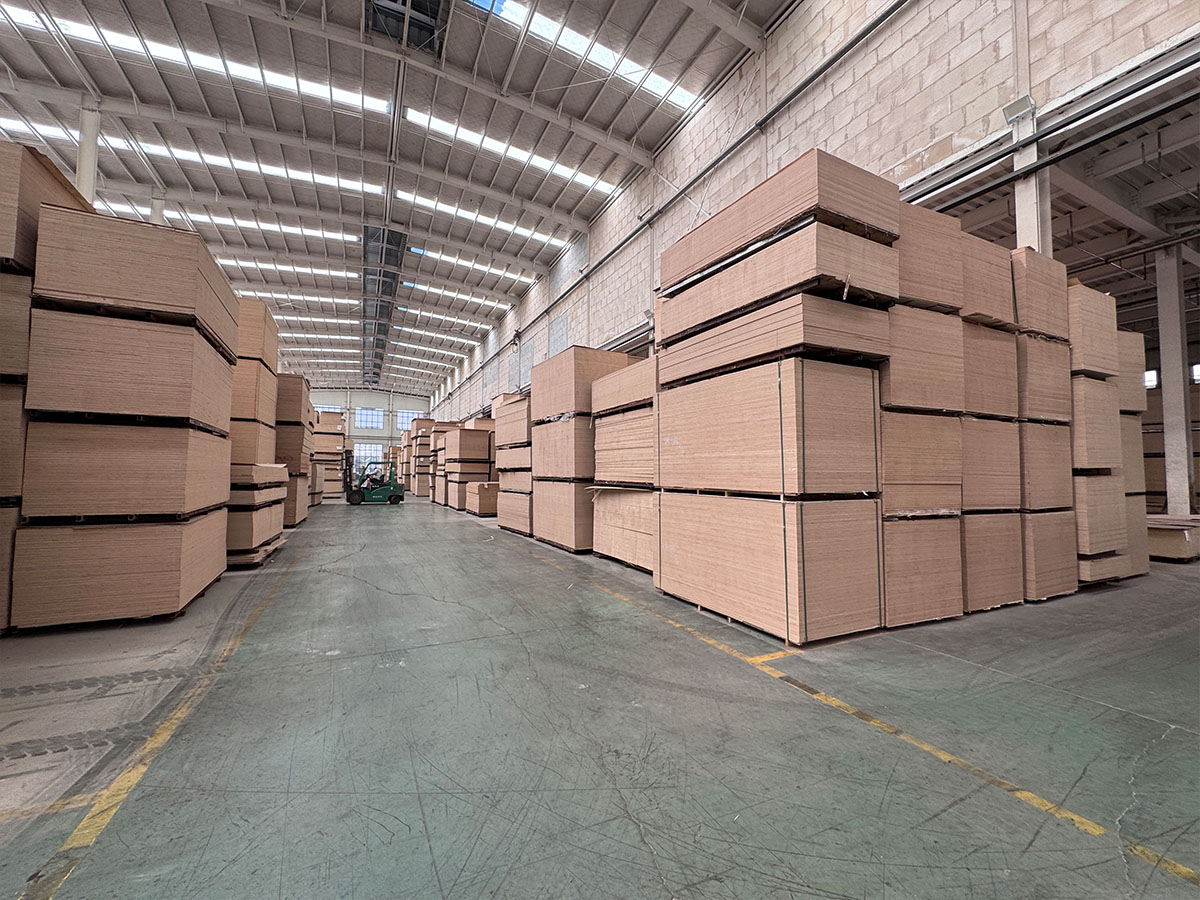
——A New Landscape for the Wood Industry Under Environmental Upgrades, Demand Divergence, and Supply Chain Reshaping
In 2026, China's wood-based panel industry stands at a new historical juncture. After three decades of rapid growth and five years of deep adjustment, the industry is shifting from extensive development based on "scale expansion" to a stage of high-quality development centered on "value reconstruction." The rigid constraints of environmental standards, deep divergence in downstream demand, and the restructuring of global supply chains together form the fundamentals of the current panel industry.
I. Policies and Standards: Environmental Thresholds Continue to Rise, "Green Compliance" Becomes the Survival Baseline
GB 18580-2025 Officially Implemented; E0 Grade Included in Mandatory Standards for the First Time.
On June 1, 2026, the mandatory national standard "Limit of Formaldehyde Emission of Interior Decoration and Renovation Materials — Wood-Based Panels and Their Products" (GB 18580-2025) officially took effect. This is another major upgrade nine years after the previous revision in 2017.
The core change of this revision is that the E0 grade (formaldehyde emission ≤ 0.050 mg/m³) has been formally incorporated into the national mandatory standard system for the first time. Previously, although the E0 grade enjoyed high recognition within the industry, it was more of a market-driven classification without explicit national mandatory endorsement. This inclusion means the panel industry has officially bid farewell to the era of "E1 grade equals compliance."
The implementation of the new standard brings three major impacts:
Substantial Increase in Industry Entry Threshold: Small and medium-sized enterprises with outdated production equipment, substandard adhesive formulations, and unsound quality control systems will face severe technical compliance pressure. According to industry research data from the China National Forestry Industry Association for the first half of 2026, during the three-month window before the implementation of GB 18580-2025, the number of plywood enterprises in China decreased by approximately 60 net, with the vast majority being small enterprises with annual production capacity below 20,000 cubic meters. Industry concentration is showing an accelerating upward trend.
Accelerated Adhesive Technology Upgrades: The industry's demand for low-formaldehyde and formaldehyde-free adhesives has been rapidly unleashed. The market penetration of new environmentally friendly adhesives such as MDI formaldehyde-free adhesive, soy protein adhesive, and lignin adhesive has surged from less than 8% in 2024 to over 15% in the first half of 2026, representing a doubling growth. For panel manufacturers, the choice of adhesive technology route is becoming a critical variable determining market competitiveness.
Environmental Pressure Transmitted Throughout the Industry Chain: From upstream adhesive manufacturers and veneer suppliers to downstream furniture manufacturing and decoration renovation, the pressure of environmental compliance is being transmitted step by step along the industry chain. Panels that cannot provide test reports meeting the new national standard are increasingly being blacklisted by engineering projects and furniture brands.
Multiple Regions Issue New VOCs Emission Regulations; Coating and Adhesive Production Face Stricter Controls.
In the first half of 2026, major wood-based panel producing regions including Shandong, Jiangsu, Hebei, and Guangdong have successively issued stricter local standards for air pollutant emissions, incorporating volatile organic compounds (VOCs) emissions from wood-based panel manufacturing into key regulatory oversight. For enterprises still using urea-formaldehyde resin adhesives with outdated exhaust treatment facilities, environmental compliance costs are rising significantly.
II. Market Supply and Demand: Total Capacity Slightly Declines, Structural Divergence Intensifies
Plywood Capacity Slightly Declines but Remains at High Levels; Structural Adjustment Signals Clear.
According to data from the "National Forestry Industry Statistical Annual Report (2025)" released by the National Forestry and Grassland Administration in July 2026, and industry flash reports for the first half of 2026:
By the end of 2025, the total production capacity of plywood products (including plywood, blockboard, laminated veneer lumber, etc.) nationwide was approximately 247 million cubic meters per year, a slight decrease of about 1.2% from 250 million cubic meters in 2024. This marks the first annual capacity decline in China's plywood industry since 2010, a significant milestone.
In the first half of 2026, approximately 35 new plywood production lines were added nationwide, while about 85 outdated production lines were eliminated during the same period, resulting in a net decrease of about 50 lines. Total industry capacity is expected to further compress to 243-245 million cubic meters per year.
Regional distribution of capacity is also changing. The three major panel industry clusters of Linyi (Shandong), Pizhou (Jiangsu), and Guigang (Guangxi) together account for over 55% of national total capacity, but their development paths have diverged significantly:
Downstream Demand Shows "Ice and Fire" Divergence.
In the first half of 2026, downstream demand for panels showed clear divergence:
New Real Estate Construction Demand Continues to Face Pressure: According to data from the National Bureau of Statistics, from January to June 2026, national real estate development investment decreased by approximately 8.5% year-on-year, and new housing construction starts decreased by approximately 12% year-on-year. As a result, market demand for formwork plywood shrank by approximately 10-15% year-on-year, making it the panel category with the most significant demand contraction.
Renovation of Existing Homes and Furniture Replacement Demand Grows Against the Trend: In stark contrast to new construction demand, renovation of existing homes and furniture replacement demand showed steady growth. According to data from the China Building Materials Circulation Association, sales at national building materials and home furnishing markets increased by approximately 5-8% year-on-year in the first half of 2026. Demand for particleboard and MDF for panel furniture remained relatively stable, with sales of E0-grade and above environmentally friendly panels growing by over 20% year-on-year.
Export Market Shows Structural Adjustment: In the first half of 2026, China's total wood-based panel exports increased by approximately 3% year-on-year, but the structure of export destinations changed significantly — exports to ASEAN (RCEP member countries) increased by approximately 12% year-on-year, while exports to the EU slowed to less than 2% growth due to the Carbon Border Adjustment Mechanism (CBAM). Environmental and carbon footprint certification requirements for exported panels are becoming new trade barriers.
III. International Trade: Green Barriers and Compliance Costs Become New Challenges
EU Carbon Border Adjustment Mechanism (CBAM) Extends to Wood-Based Panels.
From January 1, 2026, the EU Carbon Border Adjustment Mechanism officially entered its implementation phase, gradually extending its coverage to wood products and forestry-related products. Although wood-based panels have not yet been directly included in CBAM's accounting scope, the EU Deforestation Regulation (EUDR), implemented concurrently since January 2025, has already set clear requirements for the traceability of wood sources for wood-based panel products.
This means that panel products exported to Europe must provide full-chain traceability certification from logging site to finished product export, ensuring that wood does not originate from illegal logging or deforestation areas. For small and medium-sized enterprises lacking comprehensive supply chain traceability systems, this constitutes a "green barrier" more binding than tariffs.
US Anti-Dumping Duties on Chinese Plywood Enter Fifth Administrative Review.
In May 2026, the US Department of Commerce initiated the fifth administrative review of the anti-dumping duty order on hardwood plywood from China. Since the US first imposed anti-dumping duties on Chinese plywood in 2013 (with rates ranging from 13.47% to 118.88%), Chinese plywood exports to the US have significantly declined. In 2025, China's plywood exports to the US were only about 15% of the 2012 level.
Against this backdrop, an increasing number of Chinese panel manufacturers are accelerating their "going global" strategies — establishing production bases in Southeast Asia (Vietnam, Thailand, Malaysia) or using entrepot trade to circumvent high tariff barriers. This trend has also driven rapid growth in plywood capacity in Southeast Asia, creating competitive pressure on China's domestic exports.
IV. Technology Trends: Digitalization and Green Manufacturing as Dual Drivers
Smart Manufacturing Accelerates Deployment in the Panel Industry.
In 2026, the digital transformation of the panel industry has fully entered the "large-scale application" stage from the "concept validation" phase:
Online Inspection Equipment Penetration Rate Significantly Increased: The penetration rate of digital quality control equipment such as X-ray density online monitoring systems, near-infrared moisture meters, and machine vision surface defect inspection systems in large panel enterprises has jumped from less than 10% in 2023 to over 40% in 2026. These devices enable real-time monitoring and feedback of panel density, moisture content, and surface defects, upgrading the traditional manual sampling inspection model to a full-batch, full-process online monitoring model.
MES (Manufacturing Execution System) Application Accelerates in the Panel Industry: Integrating production planning, equipment status, quality data, and energy consumption data into a unified digital platform, achieving full-process digital management from order to delivery, has become the "standard configuration" for panel enterprises with annual output exceeding 100 million yuan.
AI Visual Inspection Begins to Take Hold: Some leading enterprises are beginning to introduce AI surface defect recognition systems based on deep learning, automatically identifying and classifying defects such as scratches, indentations, adhesive spots, and carbonization points on panel surfaces, with detection accuracy and efficiency far exceeding manual visual inspection.
Bio-Based Adhesives Enter Accelerated Industrialization Phase.
2026 is regarded as the "first year of bio-based adhesive industrialization." With rising environmental standards and fluctuations in petrochemical raw material prices, multiple bio-based adhesive technology routes have achieved industrialization breakthroughs:
According to statistics from the Adhesive and Surface Processing Professional Committee of the China National Forestry Industry Association, in the first half of 2026, production of wood-based panels using non-aldehyde or bio-based adhesives accounted for over 15% of total industry output, and is expected to reach 30% by 2028.
V. Industry Landscape: Concentration Increases, Branding Accelerates
Small and Medium-Sized Enterprises Accelerate Exit, Leading Enterprises Gain Market Share.
Affected by multiple factors including rising environmental compliance costs, raw material price fluctuations, and downstream demand divergence, the operational pressure on small and medium-sized enterprises in the panel industry continues to intensify. In the first half of 2026:
-
Small plywood enterprises with annual production capacity below 30,000 cubic meters had an average operating rate of less than 60%
-
The industry CR10 (market share of the top 10 enterprises) increased from less than 8% in 2020 to over 15% in the first half of 2026
-
Industry consolidation is primarily driven by "natural market elimination," with large-scale M&A cases still rare, but the trend of leading enterprises expanding market share through new capacity construction and OEM manufacturing has become very apparent
Branding and Differentiated Competition Become the Main Theme.
In a buyer's market environment with relatively excess capacity, business models relying solely on price competition are unsustainable. Competition in the panel industry is shifting from "price competition" to "value competition":
Branding: More and more panel enterprises are beginning to focus on brand building, constructing differentiated competitive advantages through brand positioning, cultural output, and service commitments. JINDIWOOD's brand philosophy of "Engineered for Certainty" and its "Full After-Sales Guarantee" service commitment are typical practices under this trend.
Service-oriented: Transitioning from simply "selling panels" to providing "total solutions," including customized design, technical support, quality assurance, logistics coordination, and other value-added services.
Internationalization: While consolidating traditional export markets, actively expanding into emerging markets such as RCEP member countries and Belt and Road Initiative countries. Enhancing brand penetration in international markets through overseas warehouse construction and localized service team deployment.
VI. Outlook: Certainty is a Scarce Resource
Looking ahead from the mid-2026 point, the macro environment facing the panel industry remains full of uncertainty — raw material price fluctuations, changes in international trade policies, real estate market cycles, continuous upgrades to environmental standards...
However, it is precisely in this uncertain market environment that "certainty" itself has become the scarcest and most valuable resource.
For panel buyers and users, supply chain certainty (capacity assurance, on-time delivery), quality certainty (consistent standards, after-sales guarantee), and compliance certainty (environmental compliance, complete certifications) are more important than ever.
For panel manufacturers, whether they can provide customers with this "certainty" will determine their final position in the industry reshuffle. As JINDIWOOD's brand philosophy expresses — "Engineered for Certainty." This is not just a slogan, but a profound insight into the essence of the industry: in a market full of variables, certainty is the greatest competitive advantage.
This article is based on public data and industry research reports from the National Forestry and Grassland Administration, the China National Forestry Industry Association, and the National Bureau of Statistics, striving to objectively reflect the current state of the industry. Data citations are sourced; in case of changes, the latest official release shall prevail.

 中文
中文 繁體中文
繁體中文 日本語
日本語 English
 Deutsch
 Español
 Français
 العربية