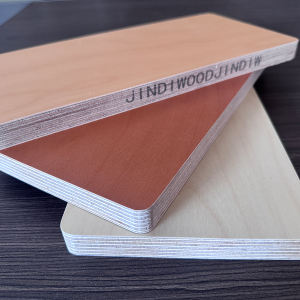
I. Basic Concept of Edge Banding
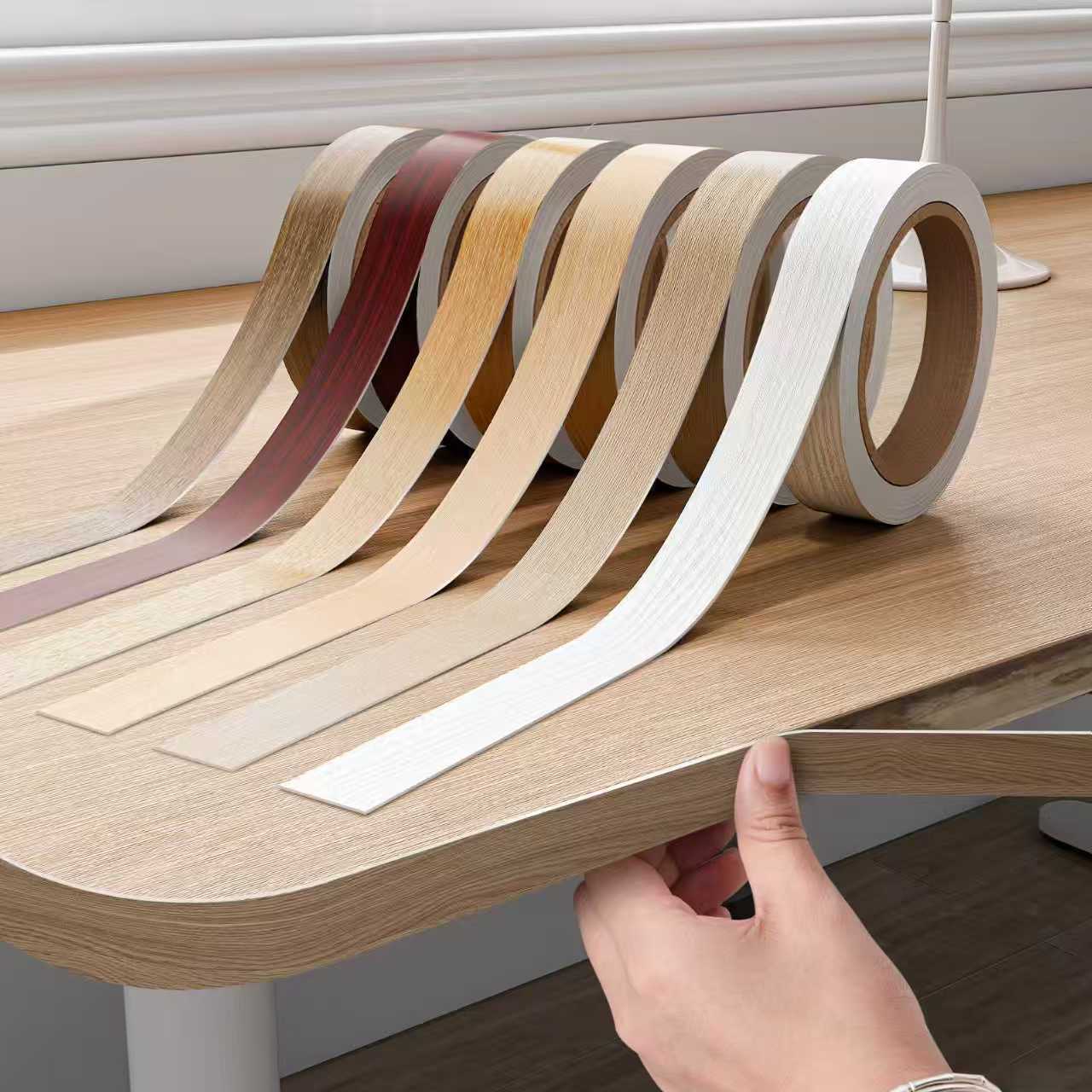
Edge banding (Edge Banding / Edge Tape) is a narrow strip of decorative and protective material applied to the cut edges of wood-based panels such as plywood, particleboard, and medium-density fiberboard (MDF). It is bonded to the panel side with an adhesive (hot-melt glue or solvent-based glue), achieving sealed protection of the panel's internal structure and beautification of its appearance.
In panel furniture and interior decoration, edge banding accounts for only a tiny proportion of material cost (usually less than 3-5%), yet it has a decisive impact on product service life, environmental performance, appearance quality, and safety of use. There is an old saying in the industry: "To judge the quality of a piece of furniture, look first at its edge banding." The quality of edge banding application often directly reflects the technical level of a furniture manufacturer.
The core functions of edge banding can be summarized in four levels:
II. Main Types of Edge Banding and Material Characteristics
2.1 Classification by Material
The mainstream edge banding products on the market can be grouped into the following five major categories, each with different performance characteristics and application scenarios:
2.2 PVC Edge Banding — In-Depth Analysis of the Market Mainstay
PVC edge banding accounts for about 70% of the global edge banding market and is the most widely used edge banding material. Its production processes and quality vary greatly; the performance gap between high-quality PVC edge banding and inferior products can be several times.
Technical Characteristics of High-Quality PVC Edge Banding:
-
Filler control: Calcium carbonate (CaCO₃) filler content controlled at 15-25%. Too low: high cost and insufficient hardness; too high (inferior products can reach 40-50%): flexibility drops sharply, brittle in winter, edge chipping during trimming.
-
Plasticizer system: Uses environmentally friendly plasticizers such as DOTP (dioctyl terephthalate) or TOTM (trioctyl trimellitate) to replace traditional phthalate plasticizers such as DEHP and DBP. Eco-friendly plasticizers contain no phthalates and comply with EU REACH and RoHS directives.
-
Anti-UV additives: UV absorbers and hindered amine light stabilizers (HALS) prevent discoloration and powdering under long-term light exposure, and white edge banding from yellowing.
-
Wear-resistant layer: High-end PVC edge banding has a transparent wear-resistant layer (PMMA or PU) on the surface, significantly improving scratch resistance, suitable for high-frequency contact surfaces such as desktops and countertop edges.
Key Performance Indicators of PVC Edge Banding:
2.3 ABS Edge Banding — The Quality Choice for the High-End Market
ABS edge banding has risen rapidly in the high-end furniture market in recent years. Its overall performance is superior to PVC, but its price is about 1.5-2.5 times that of PVC.
Core Advantages of ABS Edge Banding:
-
No whitening after trimming: This is the most distinctive identification feature of ABS edge banding. No matter how sharp the trimming knife is, the cut edge always maintains the material's natural color (black ABS edge is pure black, white ABS edge is pure white), unlike PVC which whitens due to stress. This property gives furniture edges clear, sharp lines and a premium feel.
-
Excellent weather resistance: The glass transition temperature (Tg) of ABS resin is about 105°C, much higher than PVC's around 80°C. ABS edge banding is more stable in high-temperature environments, less prone to softening and deformation; it maintains good flexibility in low-temperature environments and is less prone to brittle cracking.
-
Pure material: ABS edge banding contains no filler (or very little special filler), offering good material uniformity, more stable bonding strength after hot-melt adhesive application, and less aging failure of the adhesive layer.
-
Better environmental performance: ABS itself is non-toxic, odorless, emits less smoke when burned, and does not release corrosive gases such as hydrogen chloride that PVC releases when burned.
2.4 Melamine Edge Banding — The Classic Solution for Matching Colors
Melamine edge banding is a thin edge banding made by printing wood grain or solid-color patterns on melamine impregnated paper, then drying and cutting. It is highly compatible with the synchronous pressing process of melamine-faced panels.
Technical Points:
-
Thickness is usually 0.2-0.8mm, relatively thin, suitable for tight bonding with faced panels
-
Surface has a grain-matching design — the edge banding texture aligns continuously with the panel color, visually achieving integration of panel and edge banding ("seamless edge banding" effect)
-
Bonding method with the panel: EVA hot-melt adhesive or PUR hot-melt adhesive, achieving good bonding strength through low-temperature and low-pressure pressing
Limitations:
-
Relatively brittle, easily broken when edge banding sharp corners, not suitable for large arcs or irregular edge banding
-
Impact resistance inferior to PVC and ABS, corners easily damaged after impact
-
High requirements for application temperature (edge banding machine temperature must be precisely controlled at 160-200°C); overheating or low temperature can cause surface discoloration or poor bonding
III. Quality Standards and Testing Methods for Edge Banding
3.1 Appearance Quality
High-quality edge banding should meet the following appearance requirements:
-
Smooth and uniform surface: no bubbles, particles, pits, or scratches
-
Consistent color: color difference ΔE≤0.5 within the same batch, ΔE≤1.0 between batches
-
Straight edges: no obvious waviness or unevenness on roll edge banding edges, facilitating continuous feeding of automatic edge banding machines
-
Clear printing: wood grain edge banding has clear texture, accurate registration (deviation ≤0.2mm), no ghosting
3.2 Dimensional Accuracy (LY/T 2383-2014 "Edge Banding for Wood-Based Panel Facing")
Dimensional accuracy deviation directly affects the adaptability of the edge banding machine's feed rollers — excessive deviation can cause edge banding to deviate or jam, interrupting continuous edge banding operations.
3.3 Physical and Mechanical Properties
(1)Peel Strength (Bonding Fastness)
This is the core indicator for measuring the bonding fastness between edge banding and substrate. Test method: bond edge banding to standard substrate (particleboard/MDF), peel at 180° angle at constant speed using a peel tester, record peel force.
(2)Cold-Heat Cycle Resistance
Place edge-banded specimens alternately in high temperature (63±3°C) and low temperature (-20±2°C) environments for 2 hours each, cycling 5 times. Observe edge banding for cracking, debonding, discoloration.
(3)Aging Resistance (Xenon Lamp Aging)
Place specimens in a xenon lamp aging test chamber, expose for 500 hours, then measure color difference and peel strength retention. High-quality edge banding should meet:
3.4 Environmental and Safety Performance
(1)Heavy Metal Content (PVC Edge Banding)
Since PVC edge banding contains stabilizers (usually calcium-zinc composite stabilizers or organotin stabilizers), heavy metal content must be strictly controlled. Tested according to GB/T 26125 (IEC 62321), it should meet the following limits (RoHS directive requirements):
(2)Phthalate Content (Plasticizers)
Prefer non-phthalate plasticizers such as DOTP, TOTM, DINP. Total phthalate plasticizers (DEHP, DBP, BBP, DIBP) content should be ≤1000mg/kg (compliant with REACH Annex XVII requirements).
(3)VOCs Emission
Edge banding should have no obvious irritating odor during storage and use. Tested according to ISO 16000-6, TVOC emission ≤100μg/m³.
IV. Edge Banding Production Processes
4.1 PVC/ABS Edge Banding Production Process
Step 1: Batching and Mixing
-
PVC resin powder, plasticizer, stabilizer, filler, pigment, anti-UV additives, etc. weighed according to formula
-
Put into high-speed mixer for mixing (temperature 80-120°C) to uniformly disperse all components
-
Cool to room temperature and transfer to storage hopper for later use
Step 2: Extrusion Molding
-
Mixed material is heated and plasticized through single-screw or twin-screw extruder (barrel temperature 160-200°C, temperature gradient control in different zones)
-
Molten material is extruded into thin sheet through T-die, thickness controlled jointly by die opening and extrusion speed
-
Thin sheet is calendered and shaped by three-roll calender (upper, middle, lower rolls, temperature controlled at 120-150°C) to obtain precise thickness and smooth surface
Step 3: Surface Treatment (Printing and Texturing)
-
Printing layer (wood grain or color): Gravure printing or flexographic printing transfers the pattern to the edge banding surface, using special ink, registration accuracy ≤0.2mm
-
Surface coating: Some high-end products apply an additional UV-curable varnish or PMMA wear-resistant layer over the printing layer, cured by UV lamp irradiation (wavelength 365nm, energy ≥800mJ/cm²), significantly improving surface hardness and wear resistance
-
Embossing (synchronized texture): Embossing rollers press textures synchronized with the printed pattern (wood grain conduits, stone texture, etc.) onto the edge banding surface, making touch and visual effects consistent
Step 4: Slitting and Winding
-
Wide edge banding is slit to required width (10-100mm) by longitudinal slitting machine
-
After slitting, inspected by online thickness gauge and colorimeter
-
Qualified products are wound into rolls by winder, usually 100-500 meters per roll
-
Each roll of edge banding must be marked on the end face: production batch number, width, thickness, color number, length
4.2 Melamine Edge Banding Production Process
Step 1: Base Paper Selection
-
Select high-quality decorative base paper of 70-120g/m², requiring water absorption, wet strength, and opacity to meet standards
Step 2: Impregnation and Drying
-
Base paper is impregnated with melamine resin (solid content 45-55%) through impregnation tank
-
Resin impregnation amount controlled by metering rollers (130-180%, based on dry base paper weight)
-
Dried through vertical or horizontal drying oven (zone temperature 80-160°C), removing volatiles, resin partially pre-cured
Step 3: Cutting and Packaging
-
Impregnated and dried base paper is slit to required width and wound
-
Melamine edge banding has high storage environment requirements (temperature 20-25°C, relative humidity 50-60%), preventing moisture absorption and adhesion or premature curing
V. Matching Principles of Edge Banding and Panels
5.1 Thickness Matching
Edge banding thickness selection needs to consider panel type and application scenario:
5.2 Color Matching
Precise color matching is the most critical part of edge banding selection:
-
Same-color matching: Edge banding and panel surface colors remain consistent, achieving "seamless" visual effect. Recommend using same brand, same batch of facing paper and edge banding to minimize color difference
-
Contrast matching: Dark panels with light edge banding, or light panels with dark edge banding, forming a contour line effect, commonly used in modern minimalist style
Color Difference Control Technical Means:
-
Spectrophotometer measures ΔE value, ΔE≤0.5 is invisible to naked eye
-
Must compare colors in standard light source box (D65 light source, color temperature 6500K)
-
Consider metamerism phenomenon: ensure edge banding and faced panel have no obvious color difference under all light sources (daylight, warm light, cool white light)
5.3 Adhesive Matching
Different edge banding materials require different hot-melt adhesives and application parameters:
Selection Logic of EVA Hot-Melt vs PUR Hot-Melt:
-
EVA hot-melt: Economical, long open time, reversible bonding (can re-melt when heated), suitable for conventional PVC edge banding and general furniture applications. Disadvantage: heat and water resistance inferior to PUR.
-
PUR hot-melt (polyurethane hot-melt): Irreversible bonding, excellent heat, water, and solvent resistance, higher bonding strength, good elasticity. Suitable for ABS edge banding, thick PVC edge banding, kitchen and bathroom furniture (high humidity environment), and export products (long-distance sea transport with high temperature and humidity). Price is about 2-3 times that of EVA.
VI. Common Quality Problems of Edge Banding
6.1 Debonding / Edge Banding Falling Off
Phenomenon: Edge banding separates from panel edge, local or entire strip lifting.
Causes:
-
Hot-melt adhesive temperature not up to standard (too low: poor wetting; too high: adhesive aging and deterioration)
-
Insufficient edge banding machine pressure or worn pressure rollers, adhesive layer not fully pressed
-
Dust, oil, or excessive moisture content (>12%) on panel edge
-
Hot-melt adhesive open time not matching edge banding machine speed — too fast, adhesive solidifies before pressing
Solutions:
-
Calibrate edge banding machine glue pot temperature with infrared thermometer
-
Regularly check pressure roller pressure and flatness to ensure uniform pressing
-
Blow panel edges with compressed air before edge banding to remove dust
-
Select hot-melt adhesive model matching edge banding speed (open time 5-15 seconds adjustable)
6.2 Edge Banding Shrinkage / Whitening Exposure
Phenomenon: After edge banding for some time (hours to days), edge banding shrinks in length direction, causing substrate exposure at both ends of panel edge ("whitening exposure").
Causes:
-
Edge banding has residual stress during production (over-stretched during stretch forming without sufficient annealing)
-
Edge banding linear expansion coefficient differs greatly from panel, shrinkage not synchronized during temperature changes
-
Edge banding in winter low-temperature environment, temperature difference aggravates shrinkage
Solutions:
-
Select high-quality edge banding with sufficient stress release (annealed or online cooling shaped during production)
-
Store panel and edge banding at same ambient temperature for more than 24 hours before edge banding
-
Appropriately reduce edge banding machine speed and increase pressing temperature during winter construction
6.3 Glue Overflow / Obvious Glue Line
Phenomenon: Obvious adhesive squeeze-out line visible at the junction of edge banding and panel surface, affecting appearance and difficult to remove.
Causes:
-
Excessive hot-melt adhesive application amount (conventional amount 150-250g/m², too high causes glue squeeze-out)
-
Poor panel edge flatness, uneven adhesive distribution
-
Edge banding machine milling cutter or trimming knife not adjusted properly, overflow glue not synchronously removed
Solutions:
-
Precisely control glue roller application amount (achieved by adjusting gap or scraper)
-
Ensure panel edge is straight without waves before edge banding (recommend double-end milling for pre-precision milling)
-
Select edge banding machine with pre-milling function, mill and trim panel edge before applying glue
6.4 Trimming Whitening (Specific to PVC Edge Banding)
Phenomenon: After PVC edge banding is cut by trimming knife, white marks appear on the cut edge.
Causes:
-
PVC material undergoes silver streak phenomenon when subjected to shear stress — stress concentration areas form tiny voids and silver streak bands, scattering light and appearing white
-
Trimming knife not sharp enough, or excessive trimming amount, causing excessive mechanical stress
-
Excessive filler content (inferior PVC edge banding) aggravates stress whitening
Solutions:
-
Use trimming knife + scraper combination (rough trim first then fine scrape, reducing residual stress)
-
Switch to ABS edge banding to fundamentally avoid this problem
-
Select high-quality PVC edge banding with low filler content and moderate plasticizer content
-
After trimming, use hot air gun (temperature about 120°C) to slightly heat the cut edge, which can lighten or even restore the white
6.5 Edge Banding Surface Scratches / Loss of Gloss
Phenomenon: Obvious scratches or local gloss decrease on edge banding surface.
Causes:
-
Impurities or hard particles on edge banding machine pressure roller surface
-
Tool scraping edge banding surface during trimming
-
Hard object scratching during subsequent processes (handling, packing)
Solutions:
-
Regularly clean all moving parts of edge banding machine, keep pressure roller surface clean
-
Regularly replace trimming blades (recommend replacing every 500-800 meters)
-
Wrap finished furniture corners with PE protective film before packing to avoid subsequent damage
VII. Technical Development Trends of Edge Banding
7.1 Same-Color Integration and High Simulation
As digital printing technology develops toward industrial-grade applications, edge banding surface effects are evolving toward ultimate simulation:
-
Synchronized grain matching technology: Edge banding wood grain texture and panel surface texture are continuous and misalignment-free at the joint, achieving "integrated molding" visual effect
-
3D tactile embossing: Through precise temperature control and embossing processes, reproduce wood conduit depth and tactile feel on edge banding surface
-
Digital custom printing: Small-batch custom edge banding becomes possible (traditional gravure printing requires plate making, high minimum order quantity), providing more possibilities for personalized furniture design
7.2 Environmental Protection and Lead-Free
-
Comprehensive popularization of lead-free stabilizers: Calcium-zinc composite stabilizers have basically replaced traditional lead salt stabilizers, ensuring lead content in edge banding is far below RoHS limit requirements
-
Water-based ink application: Edge banding printing processes gradually use water-based ink to replace solvent-based ink, significantly reducing VOCs emissions
-
Bio-based plasticizers: Bio-based plasticizers represented by epoxidized soybean oil (ESO) are beginning to be applied in high-end PVC edge banding, further reducing dependence on petrochemical-based raw materials
7.3 Functionalization and Intelligence
-
Antibacterial edge banding: Add silver ions or nano-zinc oxide antibacterial agents to edge banding surface, inhibiting surface bacterial growth, suitable for hospitals, schools, kitchen furniture
-
Fragrance-releasing/odor-purifying edge banding: Add low-VOCs slow-release fragrance or formaldehyde-removing factors, continuously releasing light fragrance or decomposing formaldehyde in the air
-
Sensing edge banding: Embed conductive circuits or RFID tags in the inner layer of edge banding, giving furniture "sensing" or "traceability" functions, suitable for smart furniture and anti-counterfeiting traceability
7.4 Ultra-Thin and Lightweight
To match the minimalist design trend, demand for 0.2-0.3mm ultra-thin edge banding is growing. Such products require materials with higher strength, lower shrinkage, and better bending performance, placing more refined control requirements on formulas and processes.
JINDIWOOD · Engineered for Certainty — From every micron of dimensional accuracy in edge banding to every bonding peel strength, we protect every detail of your furniture with certain quality standards.
This article is an original technical article by JINDIWOOD. Reproduction must indicate the source.

 中文
中文 繁體中文
繁體中文 日本語
日本語 English
 Deutsch
 Español
 Français
 العربية