 中文
中文 繁體中文
繁體中文 日本語
日本語 English
 Deutsch
 Español
 Français
 العربية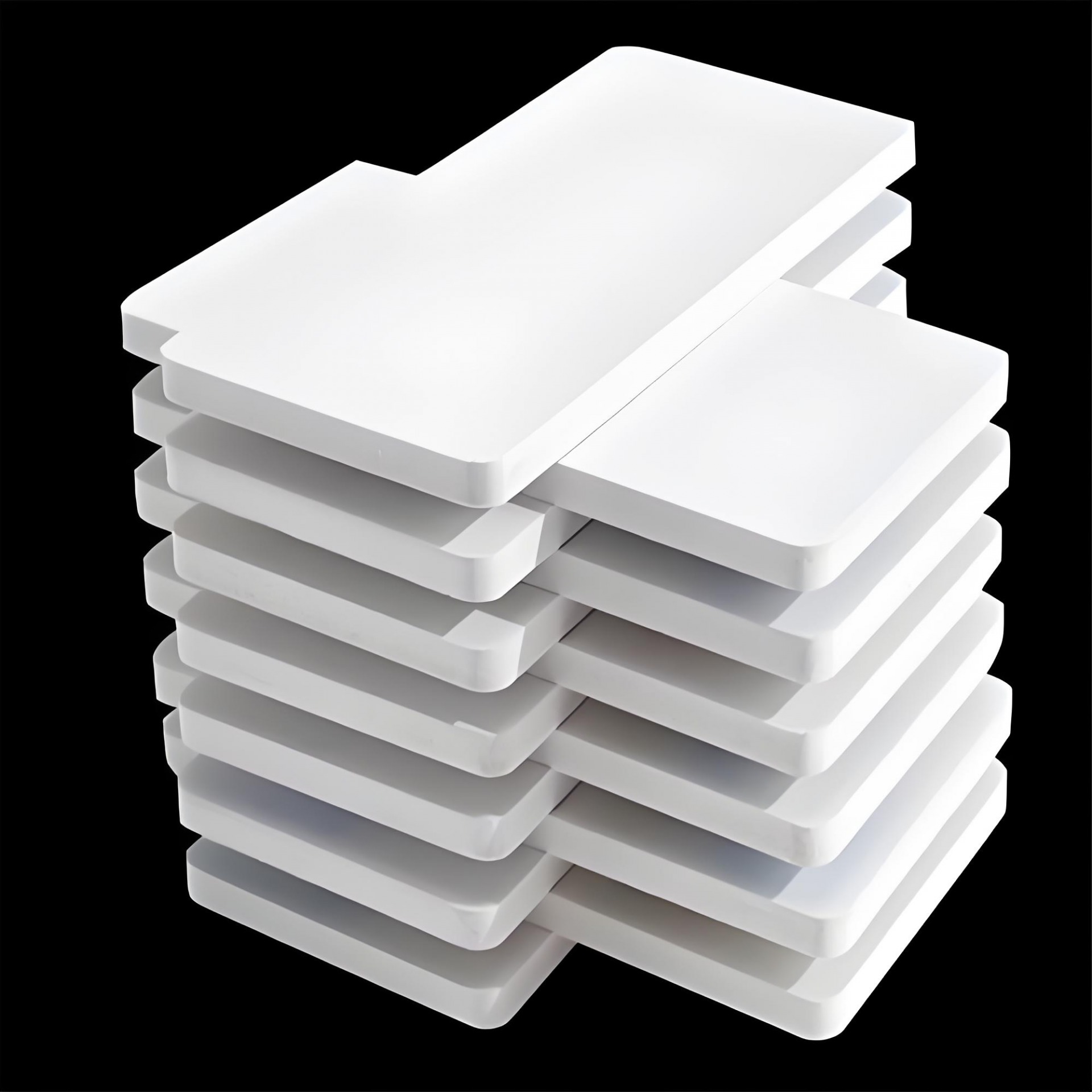
I. Basic Concept of PVC Foam Board
PVC foam board (Polyvinyl Chloride Foam Board), also known as Schneider Board or Andy Board, is a new type of lightweight panel with a microcellular foam structure inside, made from polyvinyl chloride (PVC) resin as the main raw material, with foaming agents, stabilizers, processing aids, etc., through extrusion or molding processes.
Its essence is the lightweighting of PVC material — reducing the density of PVC from 1.4 g/cm³ (solid) to 0.4-0.8 g/cm³ (foamed) through foaming technology, while retaining the inherent excellent properties of PVC such as waterproofing, corrosion resistance, and flame retardancy, and endowing the board with good thermal insulation, sound insulation, and cushioning properties.
Industry Status: PVC foam board is one of the most successful practices of the concept of "replacing wood and aluminum with plastic." It combines the machinability of wood with the durability of plastic, and is widely used in advertising exhibitions, building decoration, furniture manufacturing, transportation and other fields. According to statistics from the China Plastics Processing Industry Association, China's annual production of PVC foam boards exceeded 2 million tons in 2025, making it the world's largest producer and consumer of PVC foam boards.
II. Foaming Principles and Classification of PVC Foam Board
2.1 Foaming Principle
The core technology of PVC foam board lies in the formation of a uniform, fine closed-cell or open-cell structure within the PVC matrix during chemical or physical foaming processes.
Chemical Foaming Method (Mainstream Process):
Chemical foaming agents (such as azodicarbonamide (AC foaming agent), sodium bicarbonate, etc.) undergo thermal decomposition in the PVC melting temperature range (approximately 170-200°C), releasing gases such as nitrogen (N₂), carbon dioxide (CO₂), and a small amount of carbon monoxide (CO):
AC foaming agent decomposition reaction (190-210°C):
H₂NCON=NCONH₂ → N₂↑ + CO↑ + CO₂↑ + Solid residue
The gas generated by decomposition forms countless tiny bubble nuclei in the PVC melt. The bubble nuclei grow and stabilize under the combined action of melt pressure and temperature, and finally the bubble structure is "frozen" inside the board during cooling and shaping, forming a foamed board.
Physical Foaming Method (High-end Process):
Inert gases (such as nitrogen, carbon dioxide) or low-boiling liquids (such as butane, pentane) are injected into the PVC melt under high pressure, and the gas is supersaturated and precipitated out through rapid pressure release or temperature rise, forming a microporous structure. The physical foaming method produces smaller and more uniform bubble sizes (pore size up to 50-200μm), but requires higher equipment investment and process control difficulty, and is mainly used for high-end micro-foamed products.
2.2 Classification of PVC Foam Board
According to different foaming structures and production processes, PVC foam boards are mainly divided into the following three categories:
| Type | Foaming Structure Characteristics | Surface Condition | Production Process | Density Range (g/cm³) | Main Applications |
|---|---|---|---|---|---|
| Free Foam Board | Both core and surface layers are foamed, density uniform from surface to core | Fine matte or textured surface | Free foaming process (direct foaming expansion at die exit) | 0.4-0.7 | Advertising display boards, engraving, screen printing, inkjet printing |
| Celuka Foam Board | Foamed core, dense surface (skin layer thickness 0.2-0.5mm) | Smooth and dense surface, similar to solid PVC board | Celuka foaming process (cooling and shaping at die exit, surface frozen, core foaming expansion) | 0.5-0.8 | Cabinet boards, bathroom vanity boards, furniture boards, building formwork |
| Co-extruded Foam Board | Multi-layer composite structure (surface layer is unfoamed PVC or modified layer, core layer is foamed) | Surface can be designed with various material effects (high-gloss, matte, wood grain, etc.) | Co-extrusion process (twin-screw extruder simultaneously extruding different formulations) | 0.6-0.9 | High-end decorative panels, outdoor construction, vehicle and marine interiors |
Process Difference Between Free Foam and Celuka Foam (Key):
Free foam board: After extrusion from the die, it directly enters an open foaming zone, where the melt expands freely without restraint. The surface forms a thin, slightly dense skin layer due to contact with air. Without forced cooling, it achieves a higher expansion ratio and lower density, but surface hardness is relatively lower.
Celuka foam board: Immediately after extrusion from the die, it passes through a calibrator (cooling sizing sleeve) — the inner wall of the metal sleeve forcibly cools the board surface, causing the surface PVC melt to freeze rapidly and form a high-density "skin layer," while the core remains in a high-temperature molten state and continues to foam and expand. This ultimately forms a "hard surface, soft core" sandwich structure — the surface is as dense as a solid board, while the core is as lightweight as a sponge.
The skin layer thickness of Celuka foam board is typically 0.2-0.5mm (per side), with hardness (Shore D) reaching 70-78, significantly higher than the 55-65 of free foam boards.
III. Formulation System of PVC Foam Board
3.1 Core Raw Material Composition
| Component | Typical Addition Amount (parts) | Function | Technical Requirements |
|---|---|---|---|
| PVC Resin (SG-5/SG-7/SG-8) | 100 | Base resin, determines basic performance of the board | K value 65-68 (polymerization degree 1000-1200), suspension method porous resin required |
| Foaming Agent (AC foaming agent/sodium bicarbonate) | 0.5-2.0 | Decomposes to generate gas, forming microporous structure | Decomposition temperature matching PVC processing temperature (190-210°C), particle size ≤5μm |
| Stabilizer (calcium-zinc composite/organotin) | 2.0-4.0 | Prevents PVC decomposition and discoloration during high-temperature processing | Thermal stability time ≥60 minutes (200°C), lead-free and environmentally friendly |
| Processing Aid (ACR modifier) | 1.0-3.0 | Improves melt strength and elongation, stabilizes bubble structure | Acrylate copolymer, promotes plasticization and melt uniformity |
| Foaming Regulator (e.g., K-400) | 3.0-6.0 | Regulates melt viscoelasticity, controls cell size and uniformity | High molecular weight acrylate copolymer, increases melt strength |
| Lubricant (stearic acid/paraffin/PE wax) | 0.5-1.5 | Reduces internal and external friction, improves processing flow, aids demolding | Balanced internal/external lubrication, prevents exudation |
| Filler (light calcium carbonate/talc powder) | 5-30 (depending on product requirements) | Reduces cost, improves rigidity, improves dimensional stability | Particle size ≤2μm, surface activated |
| Colorant/Titanium Dioxide (TiO₂) | 0-5 | Imparts color to the board, increases opacity (white boards) | Temperature resistance ≥230°C, non-migrating, non-fading |
3.2 Technical Analysis of Key Additives
(1) Foaming Regulator — The Decisive Factor for Cell Quality
The foaming regulator (typically a high molecular weight acrylate copolymer) is one of the most important additives in PVC foam board formulations. Its core function is to improve the strength and elasticity of the PVC melt, preventing bubbles from rupturing or coalescing during growth, ultimately forming a fine, uniform, and independent closed-cell structure.
Mechanism of Action:
-
Regulator molecules intertwine between PVC macromolecular chains, forming physical cross-linking points and significantly increasing melt tension
-
At the moment when the foaming agent decomposes to generate gas, high melt strength can "lock" bubbles at a small size (50-200μm)
-
Insufficient regulator addition → coarse cells, coalescence, rupture → uneven board density, reduced strength, rough surface
-
Excessive regulator addition → excessively high melt strength → foaming difficulty, insufficient expansion ratio, high density
(2) Matching Selection of Foaming Agents
| Foaming Agent Type | Decomposition Temperature (°C) | Gas Yield (ml/g) | Applicable Products | Characteristics |
|---|---|---|---|---|
| AC Foaming Agent (Azodicarbonamide) | 190-210 | 220-250 | General-purpose PVC foam board | High gas yield, cost-effective, high decomposition temperature, requires co-foaming agent (zinc oxide) to reduce decomposition temperature to 185°C |
| Sodium Bicarbonate (Baking Soda) | 150-180 | 150-200 | Low-temperature processing products | Low decomposition temperature, environmentally friendly, but lower gas yield |
| Composite Foaming Agent | 160-190 | 200-230 | Celuka foam board | Combination of AC + sodium bicarbonate + co-foaming agent, achieving staged foaming, optimizing cell structure |
IV. Production Process Flow of PVC Foam Board
4.1 Process Flowchart
Raw Material Weighing → High-Speed Mixing → Cooling Mixing → Extrusion Plasticization → Die Forming → Foaming Expansion
  → Cooling and Shaping → Hauling and Cutting → Sanding and Leveling → Film Lamination/Packaging → Finished Product
4.2 Technical Details of Each Process Step
Step 1: High-Speed Mixing
All powder and liquid additives including PVC resin, stabilizer, foaming agent, lubricant, etc., are accurately weighed according to the formulation and fed into a high-speed mixer (hot mixer) for blending. The hot mixer speed is typically 1000-1500 rpm, relying on frictional heat generation (rather than electric heating) to raise the material temperature to 110-125°C.
Mixing Endpoint Judgment: Material temperature reaches the preset value (typically 115-120°C), and the material is in a fluffy powder state, without agglomeration, with uniform color.
Key Control: The foaming agent must not decompose prematurely during the hot mixing stage; therefore, the hot mixing temperature must be controlled at least 60°C below the foaming agent decomposition temperature (≥185°C).
Step 2: Cooling Mixing
After hot mixing, the material temperature is too high (110-120°C) and must be immediately transferred to a cool mixer (low-speed stirring, jacketed with cooling water) to cool down to 40-50°C before discharging. Purpose of cooling mixing:
-
Prevents high-temperature material from agglomerating in the storage bin or causing premature decomposition of the foaming agent
-
Allows various additives to fully adsorb onto the surface of PVC resin particles, improving dispersion uniformity
Step 3: Extrusion Plasticization
The cooled dry blend is plasticized through a conical twin-screw extruder. The conical twin-screw extruder is the mainstream equipment for PVC foam board production, with the following advantages:
-
Forced conveying and shearing action of twin screws, high plasticization efficiency
-
Conical design allows adjustable compression ratio, adaptable to different formulations
-
Narrow residence time distribution, avoiding localized overheating and degradation of materials
Extruder Temperature Settings (Typical Values):
| Barrel Section | Temperature Range | Function |
|---|---|---|
| Feeding Section (Zone 1) | 160-175°C | Material preheating, beginning plasticization |
| Compression Section (Zone 2) | 175-185°C | Main plasticization, PVC melting |
| Metering Section (Zone 3) | 180-190°C | Melt homogenization, temperature approaching foaming agent decomposition point |
| Connecting Section (Zone 4) | 185-195°C | Transition section, maintaining melt temperature |
| Die (Flange/Mold) | 190-205°C | Foaming agent begins to decompose and foam at die exit |
Step 4: Die Forming and Foaming
The plasticized PVC melt from the extruder enters a coat-hanger (T-type) die, which distributes the melt into a uniform sheet flow field.
Free Foam Board: After extrusion from the die, the melt directly enters an open foaming zone and expands under atmospheric pressure. The expansion ratio is controlled by melt strength, foaming agent decomposition rate, and cooling speed. Typical expansion ratio: 1.8-3.0 times.
Celuka Foam Board: Immediately after extrusion from the die, the melt enters a calibrator (cooling sleeve), with the inner wall temperature controlled at 20-40°C. The melt surface rapidly solidifies upon contact with the cold wall, forming a dense skin layer (approximately 0.3mm thick), while the core remains in a high-temperature molten state and continues to foam and expand until filling the calibrator cavity. Typical expansion ratio: 1.5-2.5 times.
Step 5: Cooling and Shaping
The foamed and expanded board is cooled through a vacuum sizing tank (or water-cooled roller set), reducing the board temperature from 160-190°C to 30-50°C, setting the foam structure. The vacuum sizing tank uses negative pressure adsorption to keep the board tightly against the calibrator inner wall, ensuring dimensional accuracy (thickness tolerance ±0.2mm) and surface flatness.
Step 6: Hauling and Cutting
The cooled and shaped board is evenly hauled by a caterpillar hauler (hauling speed 1-5 m/min, adjusted according to board thickness and expansion ratio), and cut by an in-line saw (typically a reciprocating saw or circular saw) according to the set length (standard 2440mm), or wound into rolls (thin boards).
Step 7: Sanding (Surface Treatment)
After the Celuka foam board exits the calibrator, although the surface has already formed a dense skin layer, there may still be slight weld marks or contour waves. Sanding treatment is carried out through a wide-belt sander:
-
Rough Sanding (80-120 grit): Removes slight surface defects and thickness unevenness
-
Fine Sanding (180-240 grit): Achieves a smooth, flat surface (Ra≤3.2μm), ensuring adhesion for subsequent lamination or spraying
Step 8: Film Lamination and Packaging
-
Apply protective film (PE protective film, thickness 30-50μm) to prevent surface scratches during transportation and processing
-
Cut to standard sizes and bundle (typically 20-50 sheets per package, fastened with strapping bands)
-
Label product specifications, color, batch number, etc.
V. Core Technical Specifications of PVC Foam Board
5.1 Density and Expansion Ratio
Density is the most core performance indicator of PVC foam board, directly related to the degree of lightweighting, mechanical strength, and cost of the board.
| Density Grade | Density Range (g/cm³) | Expansion Ratio (relative to solid PVC 1.4 g/cm³) | Typical Products |
|---|---|---|---|
| Ultra-Light Grade | 0.30-0.45 | 3.1-4.7 times | Advertising display boards, model making |
| Light Grade | 0.45-0.60 | 2.3-3.1 times | Interior decorative panels, furniture back panels |
| Standard Grade | 0.60-0.75 | 1.9-2.3 times | Cabinet boards, bathroom vanity boards, furniture boards |
| High-Density Grade | 0.75-0.90 | 1.6-1.9 times | Building formwork, vehicle and marine interiors, high-strength furniture |
Testing Method: Apparent density is determined according to GB/T 6343 (weighing method). Cut 50×50mm specimens from different positions on the board (5 points along the diagonal), measure mass and volume, take the average value, and density deviation should be ≤±5%.
5.2 Mechanical Properties
| Performance Indicator | Unit | Free Foam Board (Density 0.5-0.6) | Celuka Foam Board (Density 0.6-0.7) | Test Standard |
|---|---|---|---|---|
| Flexural Strength | MPa | 8-15 | 18-28 | GB/T 9341 |
| Flexural Modulus of Elasticity | MPa | 500-1000 | 1200-2000 | GB/T 9341 |
| Compressive Strength (10% Deformation) | MPa | 3-6 | 8-14 | GB/T 1041 |
| Impact Strength (Charpy, Notched) | kJ/m² | 5-10 | 10-18 | GB/T 1043 |
| Shore Hardness (D) | — | 55-65 (surface) | 70-78 (skin layer) | GB/T 2411 |
Source of Mechanical Performance Advantages of Celuka Foam Board: The dense surface layer (skin layer) is the main contributor to mechanical properties. Under flexural loading, the upper surface of the board bears compressive stress, while the lower surface bears tensile stress — precisely where the skin layer is located. The presence of the skin layer is equivalent to putting a hard "shell" on the board, increasing flexural strength and flexural modulus by 50-100% compared to free foam boards of the same density.
5.3 Thermal Properties
| Performance Indicator | Typical Value | Description |
|---|---|---|
| Thermal Conductivity | 0.05-0.08 W/(m·K) | Much lower than wood (0.15-0.20) and metal (>50), excellent thermal insulation performance |
| Heat Deflection Temperature (HDT, 1.82MPa) | 65-75°C | Upper service temperature limit; exceeding this temperature causes board softening and deformation |
| Vicat Softening Temperature (VST, A50) | 75-85°C | Important indicator of material heat resistance |
| Coefficient of Linear Expansion (-20°C to +60°C) | 4-6×10⁻⁵/°C | Approximately 2-3 times that of solid wood, so expansion joints should be reserved when used in environments with large temperature differences |
5.4 Combustion Performance
PVC material itself has excellent flame retardancy (chlorine content about 57%), with a Limiting Oxygen Index (LOI) of 45-50% — meaning that in environments with oxygen concentration below 45%, the material cannot sustain combustion, far higher than wood (LOI≈20-25%).
Flame Retardant Grades:
-
PVC foam board without flame retardant additives can achieve B2 grade (combustible), but self-extinguishes when the flame is removed
-
With phosphorus-nitrogen flame retardants, it can achieve B1 grade (difficult to ignite), fully meeting the fire protection requirements of building decoration materials
Combustion Product Warning: PVC foam board produces hydrogen chloride (HCl) gas (white, pungent odor) when burning in a fire, requiring smoke exhaust and ventilation systems. It is not recommended for use in enclosed small spaces without ventilation, such as walk-in closets or sealed storage rooms. Recommended applications are in commercial spaces, exhibition halls, offices, and other areas with ventilation conditions.
5.5 Chemical Corrosion Resistance
PVC foam board has good corrosion resistance to most acids, alkalis, and salt solutions:
| Chemical Medium | Corrosion Resistance Grade | Description |
|---|---|---|
| Hydrochloric Acid (10%) | Excellent | No change |
| Sulfuric Acid (20%) | Excellent | Slight discoloration |
| Sodium Hydroxide (10%) | Good | Slight surface whitening |
| Sodium Chloride Solution | Excellent | No change |
| Gasoline/Kerosene | Fair | Short-term contact tolerable, long-term contact causes swelling |
| Acetone/Benzene Solvents | Poor | Dissolves or severely swells, strictly prohibited |
5.6 Environmental and Hygienic Properties
Heavy Metal Content (RoHS Directive): After completely replacing lead salt stabilizers with calcium-zinc stabilizers, the content of lead (Pb), cadmium (Cd), mercury (Hg), and hexavalent chromium (Cr⁶⁺) are all below RoHS limits (1000/100/1000/1000 mg/kg).
Formaldehyde Emission: PVC foam board does not use urea-formaldehyde adhesives, so formaldehyde emission is at "not detected" level, making it a truly zero-formaldehyde board.
VOCs Emission: High-quality products have TVOC emission ≤100μg/m³ (ISO 16000-6), with no irritating odor. Residual vinyl chloride monomer or plasticizer volatiles in inferior products may produce odors, which need to be assessed through odor testing (sealed at 30°C for 24 hours).
VI. Surface Treatment Technologies for PVC Foam Board
6.1 Film Lamination
PVC decorative film (thickness 0.1-0.3mm) is laminated onto the foam board surface using hot-melt adhesive. Laminated boards can achieve various patterns (wood grain, stone grain, fabric grain, metallic texture, etc.) with rich surface effects. Since the PVC material of the decorative film belongs to the same PVC system as the substrate, thermal expansion coefficients match well, making it less prone to blistering and delamination. Suitable for interior decorative panels and furniture panels.
Technical Points: Lamination temperature 120-150°C, pressure 0.3-0.6MPa, speed 3-8m/min. Adhesive layer thickness controlled at 0.03-0.05mm; too thin causes poor bonding, too thick causes adhesive overflow.
6.2 Heat Transfer Printing
Using high-temperature sublimation transfer film (printed with wood grain or stone grain patterns), at 180-220°C and certain pressure, the pattern on the transfer film sublimates and penetrates into the surface coating of the board, forming clear and wear-resistant patterns. The texture of heat transfer printing is "penetrated" rather than "covered," making it less prone to scratching and with better weather resistance than film lamination. Suitable for advertising boards, display boards, and interior decorative panels.
Limitations: The color saturation of heat transfer printing is not as good as film lamination, and it cannot achieve complex textures (such as synchronized embossing).
6.3 Spray Painting / Stoving Varnish
Polyurethane (PU) or ultraviolet (UV) curable coatings are sprayed onto the foam board surface, leveled, dried, or UV-cured to form high-gloss/matte coatings. Surface hardness can reach 2H-3H (pencil hardness), with gloss adjustable from 10GU (matte) to 95GU (high-gloss). Suitable for high-end decorative panels, cabinet door panels, and speaker panels.
Process Points: Surface pretreatment (dust removal → static elimination → primer application) is required before spraying. After the primer dries, sanding (400-600 grit sandpaper) is performed, followed by topcoat application. UV coatings require curing through a UV curing oven (wavelength 365nm, energy ≥800mJ/cm²).
VII. Processing and Applications of PVC Foam Board
7.1 Processing Performance
PVC foam board combines the machinability of plastic with the ease of processing of wood, making it a "universal processing material":
| Processing Method | Suitability | Process Points |
|---|---|---|
| Sawing | Excellent | Recommended to use carbide-tipped saw blades (60-80T teeth), speed 3000-4000rpm, feed rate 3-5m/min. Avoid using high-speed steel (HSS) saw blades |
| Engraving | Excellent | Can use CNC engraving machines for hollowing, relief, and 3D shaping. Recommended to use single-edge or double-edge spiral routers, speed 18000-24000rpm, feed rate 1500-2500mm/min |
| Drilling | Good | Use standard twist drills (point angle 118°), speed 2000-3000rpm, feed rate 0.1-0.2mm/rev. Drill bits must remain sharp to avoid overheating and melting of the board |
| Hot Bending | Good | Use a heat gun (250-300°C) to heat the bending area, bend and shape after softening (minimum bending radius approximately 5-8 times board thickness). Shape is retained after cooling |
| Bonding | Good | Use PVC-specific adhesives (such as neoprene adhesive, PVC solvent adhesive (tetrahydrofuran-based)). Not recommended to use ordinary white glue or cyanoacrylate (502) adhesives |
| Surface Printing | Good | Suitable for screen printing and UV flatbed printing, no special pre-treatment required (simply clean the surface) |
7.2 Typical Application Scenarios
| Application Field | Specific Uses | Recommended Product Type | Selection Rationale |
|---|---|---|---|
| Advertising & Exhibition | Display boards, light box panels, signage, storefront windows | Free Foam Board (Density 0.45-0.55) | Lightweight and easy to install, flat surface suitable for UV/screen printing, low cost |
| Furniture Manufacturing | Cabinet boards, bathroom vanity boards, wardrobe back panels, furniture doors | Celuka Foam Board (Density 0.6-0.7) | Waterproof and moisture-resistant, dense surface, can be film-laminated/heat-transfer printed for wood grain imitation, easy to process |
| Building Decoration | Interior wall panels, ceilings, partitions, door and window trim | Celuka Foam Board (Density 0.6-0.8) | B1 flame retardant, thermal insulation, zero formaldehyde, convenient installation |
| Transportation | Train/bus/ship interior wall panels, ceilings, luggage racks | Celuka Foam Board (High-Density 0.7-0.8) | Lightweight for weight reduction, flame retardant, sound insulation, moisture-resistant |
| Industrial Anti-Corrosion | Chemical plant wall panels, laboratory countertops, electroplating tank protective boards | Celuka Foam Board (High-Density 0.7-0.8) | Excellent acid and alkali corrosion resistance, non-rusting |
| Cold Storage Insulation | Cold storage interior wall panels, refrigerated truck partitions | Free Foam Board (Density 0.45-0.55) | Low thermal conductivity, non-absorbent, low-temperature resistant (-20°C without becoming brittle) |
| Packaging & Logistics | Recyclable returnable containers, electronic component trays | Free Foam Board (Density 0.4-0.5) | Lightweight, shockproof, reusable, non-hygroscopic |
VIII. Common Quality Issues of PVC Foam Board
8.1 Surface "Pinholes" and "Specks"
Phenomenon: A large number of tiny pits (pinhole diameter 0.1-0.5mm) or dense fine bumps appear on the board surface.
Causes:
-
Pinholes: Gas generated by foaming agent decomposition is not completely encapsulated by the melt at the board surface; bubbles rupture on the surface forming pits
-
Specks: Incompletely plasticized PVC particles ("fish eyes") remain on the surface, or agglomerates formed by uneven filler dispersion
-
Processing temperature too high, foaming agent decomposes too quickly, gas release is violent and uncontrollable
-
Insufficient foaming regulator addition, melt strength unable to maintain bubble stability
Solutions: Adjust extruder temperature gradient (reduce die temperature by 5-10°C), increase foaming regulator dosage (increase by 0.5-1.0 parts), enhance dispersion uniformity during high-speed mixing.
8.2 Coarse or Uneven Cells
Phenomenon: Visible bubbles can be seen in the board cross-section, diameter >1mm, cells of varying sizes, uneven density distribution.
Causes:
-
Uneven dispersion of foaming agent (insufficient mixing time or uneven mixing temperature)
-
Melt temperature too high, foaming agent decomposes too quickly, fewer but larger bubble nuclei
-
Insufficient melt strength, bubbles coalesce and rupture
-
Foaming agent particles too coarse, resulting in fewer bubble nuclei
Solutions: Extend hot mixing time (ensuring foaming agent is completely dispersed on PVC particle surfaces), select fine-particle foaming agent (≤5μm), increase foaming regulator dosage, appropriately reduce processing temperature.
8.3 Uneven Thickness / Thickness Deviation Exceeding Tolerance
Phenomenon: Thickness difference at different positions on the same board exceeds ±0.3mm, or obvious longitudinal thickness fluctuation.
Causes:
-
Improper die gap adjustment (uneven lip opening)
-
Fluctuating expansion ratio (unstable extrusion output or hauling speed)
-
Uneven calibrator cooling (water pressure or temperature fluctuations)
-
Fluctuating hauler traction force (track slipping or unstable speed)
Solutions: Regularly calibrate die gap (measure gaps at various points with feeler gauge, adjust lip bolts), check calibrator cooling water circulation system, replace worn hauler tracks, check synchronization control of extruder speed and hauling speed.
8.4 Warping Deformation
Phenomenon: When placed on a flat surface, the four corners lift up or the center arches up, exceeding flatness tolerance.
Causes:
-
Inconsistent cooling speed on upper and lower surfaces of the board (one side cooling too fast, the other too slow)
-
Excessive sanding (single side exceeding 0.5mm) disrupting the board's stress balance
-
Not stored flat (vertical storage causing self-weight deformation)
-
Imbalance of internal and external lubricant ratios in the formulation, resulting in residual stress inside the board
Solutions: Ensure consistent water temperature on upper and lower sides of the sizing tank (temperature difference ≤5°C), control single-side sanding amount ≤0.3mm, finished boards must be stored flat with weight applied (place a flat heavy board on top of each stack), optimize internal/external lubricant ratios.
8.5 Surface Scratches / Indentations
Phenomenon: Visible scratches, indentations, or roller marks on the board surface.
Causes:
-
Foreign matter (hard particles, metal shavings) on haul rollers or calibrator surface
-
Board surface scratched during cooling and shaping (e.g., burrs on calibrator inner wall)
-
Surface friction during subsequent handling
Solutions: Regularly clean haul rollers and calibrator (inspect and clean daily), polish calibrator inner wall to mirror finish (Ra≤0.8μm), apply PE protective film (thickness 30-50μm) for surface protection.
IX. Technology Development Trends of PVC Foam Board
9.1 Microcellular Foam Technology
Using supercritical fluid technology (with CO₂ or N₂ as physical foaming agents) to produce microcellular PVC boards with cell diameters below 50μm and cell densities exceeding 10⁹ cells/cm³. Compared to traditional chemical foaming, microcellular technology can achieve lower density (up to 0.3g/cm³), higher strength, and better surface quality. Currently still in the early stages of industrialization, mainly limited by equipment investment costs and process control difficulty.
9.2 Functional Modification
| Function Direction | Technical Approach | Main Applications |
|---|---|---|
| Flame Retardant Upgrade | Add phosphorus-nitrogen halogen-free flame retardants (such as ammonium polyphosphate (APP) + pentaerythritol (PER) intumescent system), achieving B1 grade | Building decoration, transportation vehicles |
| Antibacterial and Anti-Mold | Add silver ion/nano-zinc oxide antibacterial agents (0.1-0.5%), antibacterial rate ≥99% | Hospitals, food industry, bathrooms |
| Anti-Static | Add conductive carbon black or permanent anti-static agents, surface resistivity ≤10⁹Ω | Electronic packaging, clean rooms |
| Reinforcement Modification | Add glass fiber or carbon fiber (5-15%), flexural strength increased by 50-100% | High-strength structural components |
| Weather Resistance Modification | Add UV absorbers and hindered amine light stabilizers (HALS), color retention rate ≥80% after 1000 hours of xenon arc aging | Outdoor construction, vehicle and marine interiors |
9.3 Green and Low-Carbon Development
-
Eco-friendly Stabilizers Popularization: Calcium-zinc composite stabilizers have basically completely replaced lead salt stabilizers, ensuring RoHS compliance
-
Bio-based Plasticizers: Epoxidized soybean oil (ESO) partially replaces petrochemical-based plasticizers, with addition amount of 5-15 parts
-
Recycled Material Utilization: Post-consumer recycled (PCR) PVC materials are beginning to be used in non-visible components (such as packaging boards, pallets)
-
Water-based/Non-solvent Coatings: Water-based coatings replacing solvent-based coatings in surface spraying, reducing VOCs emissions by over 90%
9.4 Lightweighting and High-Performance
Through structural optimization (bio-inspired sandwich structures, honeycomb structures) and material modification (development of high-melt-strength PVC resin), further reducing board density while maintaining mechanical properties, achieving the ultimate goal of "lighter, stronger, thinner," and expanding applications in high-end fields such as automotive lightweighting and high-speed rail interiors.
JINDIWOOD · Engineered for Certainty — Every PVC foam board is a precise balance of lightweighting, environmental protection, and functionality.
This article is an original technical publication by JINDIWOOD. Reproduction must indicate the source.