 中文
中文 繁體中文
繁體中文 日本語
日本語 English
 Deutsch
 Español
 Français
 العربية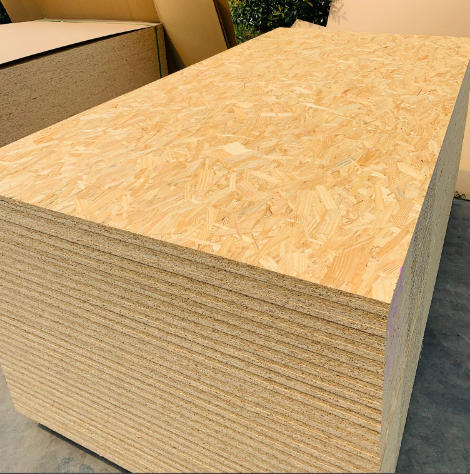
I. Basic Concept and Historical Development of OSB
OSB (Oriented Strand Board) is a new type of structural panel manufactured from small-diameter logs, thinning wood, fast-growing timber, or wood cores, processed into strands of specific dimensions through specialized equipment, then dried, glued, oriented, and hot-pressed at high temperature.
1.1 Development History
The research and development of OSB began in the United States in the 1960s, with its technological roots traceable to the earlier Waferboard — a panel pressed from randomly oriented flat wood flakes. In the 1970s, with the maturation of oriented layering technology and the application of isocyanate (MDI) adhesives in the wood industry, modern OSB was officially born.
In the 1980s, OSB entered large-scale industrial production in the United States and Canada, gradually replacing some plywood applications in building structures. In 2025, global annual OSB production exceeded 35 million cubic meters, with the North American market accounting for over 70% of global output, Europe approximately 20%, and Asia and other regions approximately 10%.
The development of OSB in China started relatively late, with production lines only being introduced after 2000. However, in recent years, with breakthroughs in domestic MDI adhesive technology, rising environmental standards, and policies promoting "bamboo instead of wood" and "straw instead of wood," China's OSB industry is entering a period of rapid growth.
JINDIWOOD has strategically introduced OSB into its product portfolio, covering multiple grades from general-purpose dry-condition types to load-bearing moist-condition types, meeting diverse needs from building structures to high-end furniture.
II. Raw Material System for OSB Manufacturing
2.1 Wood Raw Materials
OSB has significantly different raw material requirements compared to plywood and MDF — it does not require complete veneers or fine fibers, but rather strands of specific dimensions. Therefore, OSB can utilize low-grade raw materials that are difficult for the traditional panel industry to use, such as small-diameter logs, branchwood, and thinning wood, achieving extremely high material utilization rates.
| Species | Characteristics | Primary Regions | Suitable Products |
|---|---|---|---|
| Aspen | Light, soft texture, light color, uniform strands, excellent bonding properties | North America, China | Interior OSB/1, OSB/2, furniture-grade products |
| Pine | High strength, moderate resin content, good water resistance | North America, Europe, China | Structural OSB/3, OSB/4, construction formwork |
| Eucalyptus | High density, high strength, fast-growing | South America, Southern China | Load-bearing OSB, high-grade structural panels |
| Birch | Dense texture, fine surface, extremely high strength | Northern Europe, Russia | Premium furniture-grade OSB, decorative substrates |
| Mixed Hardwoods | Balanced comprehensive performance, lower cost | Worldwide | General-purpose OSB |
Technical Requirements of OSB for Raw Materials:
-
Log Diameter: 100-400mm (primarily small-diameter logs and thinning wood)
-
Log Moisture Content: 30-60% (processed immediately after fresh felling, no long-term natural drying required)
-
Bark Content Control: ≤3% (bark affects bonding strength and panel color uniformity; removed by debarker)
Comparison of Raw Material Utilization Rates:
| Panel Type | Utilization Rate | Explanation |
|---|---|---|
| Plywood | Approx. 40-50% | Requires large-diameter, defect-free logs |
| MDF | Approx. 70-75% | Raw materials are wood processing residues |
| OSB | Approx. 80-85% | Can use small-diameter logs and branchwood; almost all wood is converted into strands |
2.2 Adhesive Systems — The Core Technology of OSB
Due to its high bonding strength and excellent water resistance requirements, OSB differs from other engineered wood panels in adhesive selection.
| Adhesive Type | Application in OSB | Characteristics | Environmental Grade |
|---|---|---|---|
| MDI (Isocyanate) | Mainstream choice (high-quality OSB) | Formaldehyde-free, excellent water resistance, fast curing, high bonding strength (up to 2.0-3.0 MPa), adhesive content approx. 3-5% | ENF/HENF |
| Phenolic Resin (PF) | Traditional choice (some North American OSB) | Excellent water resistance, lower cost than MDI but higher than MUF, dark color (dark brown glue line) | E0 |
| MUF (Melamine-Modified UF) | Limited use (low-end interior grade) | Moderate moisture resistance, lower cost | E1/E0 |
| MDI+PF Hybrid | Special applications | Balances cost and performance | E0/ENF |
Technical Advantages of MDI Adhesive in OSB:
-
Formaldehyde-Free Emission: MDI (diphenylmethane diisocyanate) adhesive itself contains no formaldehyde and does not release formaldehyde after curing. This is the fundamental reason OSB can achieve ENF grade (≤0.015mg/m³) and even HENF grade (zero formaldehyde addition).
-
Fast Curing: MDI adhesive can complete cross-linking curing within 30-60 seconds at hot-pressing temperatures (180-220°C), far faster than PF adhesive (requiring 3-5 minutes). This means OSB bonded with MDI adhesive achieves higher production efficiency within the same hot-pressing cycle.
-
Excellent Water Resistance: The polyurethane cross-linking network formed after MDI adhesive curing has extremely strong hydrolysis resistance, hardly degrading even after immersion in boiling water. This makes it the ideal bonding solution for OSB/3 and OSB/4 grade products.
-
Flexible Adhesive Layer: MDI adhesive has a certain elasticity after curing, with good synchronization with the expansion and contraction of wood strands, reducing the risk of adhesive layer cracking caused by internal stress concentration.
Application Requirements for MDI Adhesive:
Due to MDI adhesive's extreme sensitivity to moisture (it can react with water to form carbon dioxide and urea compounds), its application and hot-pressing processes in OSB production require stricter control than PF adhesive:
-
Strand moisture content must be strictly controlled at 3-6% (before entering the glue applicator)
-
Glued strands must be layered and hot-pressed within 2-4 hours to prevent pre-reaction of MDI adhesive under moisture
-
Hot-pressing temperature must be ≥190°C to ensure complete curing of MDI adhesive
2.3 Auxiliary Additives
-
Paraffin Emulsion (Water Repellent): Added at 0.5-1.5% of oven-dry strand weight to reduce thickness swelling from water absorption
-
Release Agent: Sprayed on hot-press plate surfaces (before each pressing) to prevent panel adhesion to the plates
-
Colorant (Optional): Small amounts (typically 0.1-0.3%) added to surface strands to improve panel appearance color
III. Structural Design and Technical Principles of OSB
3.1 Three-Layer Oriented Structure — The "Skeleton" of OSB
The most core technical feature of OSB is its three-layer oriented layering structure, which is also the origin of its name "Oriented Strand Board":
| Layer | Strand Orientation | Thickness Proportion | Function |
|---|---|---|---|
| Surface Layers | Oriented along panel length (longitudinal direction) | 15-20% each (30-40% total) | Improves longitudinal bending strength and modulus of elasticity, provides smooth surface |
| Core Layer | Oriented along panel width (transverse direction) | 60-70% | Improves transverse bending strength, balances longitudinal-transverse performance differences, increases panel thickness |
Mechanical Principles of Oriented Layering:
Wood itself is an anisotropic material — tensile strength parallel to the grain is 10-30 times that perpendicular to the grain. OSB achieves "maximum strength in the required direction" by artificially controlling strand orientation.
In OSB:
-
Longitudinal surface layer orientation: Ensures extremely high bending strength and stiffness in the longitudinal direction, corresponding to the load-bearing direction of beams, columns, and floor panels in construction.
-
Transverse core layer orientation: Enhances strength in the transverse direction, balancing mechanical properties in both directions and avoiding the "weak direction" problem of solid wood.
Effect of Layer Orientation Ratios on Panel Performance:
| Surface Layer Ratio (L:T) | Core Layer Ratio (L:T) | Longitudinal MOR (MPa) | Transverse MOR (MPa) | L/T Ratio |
|---|---|---|---|---|
| 100:0 | 0:100 | 40-50 | 15-20 | 2.5-2.8 |
| 85:15 | 15:85 | 35-42 | 18-25 | 1.8-2.2 |
| 70:30 | 30:70 | 28-35 | 22-28 | 1.3-1.6 |
In actual production, the longitudinal-transverse strength ratio of OSB is typically controlled between 1.5 and 2.5, ensuring sufficient longitudinal load-bearing capacity while preventing transverse strength from being too low and causing longitudinal cracking.
3.2 Structural Comparison of OSB with Other Engineered Wood Panels
| Panel Type | Structural Characteristics | Mechanical Properties | Material Utilization |
|---|---|---|---|
| OSB | Oriented slender strands, alternating longitudinal-transverse layering | L/T strength ratio controllable (1.5-2.5), high overall performance | 80-85% |
| Plywood | Multi-layer veneers cross-bonded perpendicularly | Balanced L/T strength ratio (1.0-1.3), highest strength | 40-50% |
| Particleboard | Randomly oriented particles, no directionality | Isotropic, lower strength | 85-90% |
| MDF | Randomly distributed fibers, uniform and dense | Isotropic, smoothest surface | 70-75% |
IV. OSB Manufacturing Process Flow
4.1 Process Flowchart
Log Debarking → Strand Preparation → Wet Strand Storage → Drying → Screening (Surface/Core Separation)
  → Glue Application (Surface + Core, different formulations) → Oriented Layering (Three-Layer Structure)
  → Pre-Pressing → Hot Pressing → Trimming & Sanding → Grading & Packaging → Finished Product
4.2 Technical Details of Each Process Step
Step 1: Debarking and Strand Preparation
Logs are debarked in a drum debarker (bark content ≤3%), then fed into a disc flaker or drum flaker to cut the logs into flat strands of specified dimensions.
Strand dimensions are one of the decisive factors for OSB quality:
| Strand Type | Length (mm) | Width (mm) | Thickness (mm) | Aspect Ratio (L/T) |
|---|---|---|---|---|
| Surface Strands | 70-150 | 10-25 | 0.5-0.8 | 100-250 |
| Core Strands | 50-100 | 5-15 | 0.5-0.8 | 80-150 |
Significance of Strand Aspect Ratio: The larger the strand aspect ratio, the more significant the reinforcement effect after oriented layering. Long, thin strands better transmit loads and improve panel strength and stiffness. However, excessively long strands reduce layering uniformity, while too-short strands lose the oriented reinforcement effect.
Key Control Points in Strand Preparation:
-
Flaker Blade Sharpness: Worn blades increase strand surface roughness, affecting adhesive wetting and bonding strength
-
Strand Geometric Consistency: Length deviation ≤±15mm, width deviation ≤±5mm, thickness deviation ≤±0.1mm
-
Wet Strand Moisture Content: Approx. 30-50% when exiting the flaker; must be immediately sent to the dryer
Step 2: Strand Drying
Wet strands are dried in single-pass rotary drum dryers. The heat source is typically a hot air furnace burning biomass (bark, sanding dust), with hot air temperatures of 160-220°C.
-
Moisture Content After Drying (Before Glue Application): 3-6%
-
Dryer Inlet Temperature: 200-220°C (surface strands) / 160-180°C (core strands, to avoid overdrying and breakage)
-
Dryer Outlet Temperature: 80-100°C
-
Drying Time: 2-5 minutes
Importance of Drying Temperature Control:
-
Excessively high temperature (>220°C): Strand surface carbonization, darkening color, reduced strength ("over-burning"), MDI adhesive cannot form chemical bonds with overly carbonized wood fibers
-
Excessively low temperature (<150°C): Strand moisture content too high (>8%), MDI adhesive reacts with water during gluing and hot-pressing stages, generating CO₂ bubbles and causing "honeycomb" defects within the panel
Dried strands are graded through mechanical screening systems, separating strands meeting surface and core dimension requirements into surface and core silos respectively.
Step 3: Glue Application
Surface and core strands enter high-speed mixing glue applicators separately. MDI adhesive is added via high-pressure atomization spraying, with paraffin emulsion (water repellent) and release agent sprayed in simultaneously.
| Parameter | Surface Strands | Core Strands |
|---|---|---|
| Glue Application Rate (MDI / Oven-Dry Strand Weight) | 4-6% | 3-5% |
| Paraffin Addition Rate (Oven-Dry Strand Weight) | 0.5-1.0% | 0.5-1.5% |
| Moisture Content Increase After Gluing | +2-3% | +2-3% |
| Total Moisture Content After Gluing (Before Layering) | 6-9% | 6-9% |
Glue Uniformity Testing: Samples are taken at the glue applicator outlet. Solvent method (dissolving the glue layer by soaking strands in dichloromethane, then measuring MDI concentration in the solvent using UV spectrophotometry) or NIR spectroscopy is used to detect adhesive coverage and uniformity on strand surfaces. Acceptance criteria: coverage ≥95%, coefficient of variation ≤10%.
Step 4: Oriented Layering — The Most Core Process of OSB
Glued surface and core strands are respectively formed into three-layer structured mats through mechanical oriented formers (or air-flow oriented formers).
Principles of Oriented Formers:
-
Mechanical Orientation: Strands slide down vibrating orientation plates (or combs); elongated strands automatically align along the plate direction, achieving oriented arrangement
-
Air-Flow Orientation: Strands are suspended in airflow; orientation is achieved through the directional effect of airflow and the strands' aerodynamic characteristics (strands with large aspect ratios automatically align along the flow direction)
-
Electrostatic Orientation: Strands are polarized in an electrostatic field and oriented along the field direction (currently less commonly used)
Three-Layer Mat Forming Process:
-
Bottom Layer (Lower Surface): First layer of surface strands (longitudinally oriented), thickness approx. 3-8mm
-
Core Layer: Core strands (transversely oriented), thickness approx. 60-70% of total mat thickness
-
Top Layer (Upper Surface): Second layer of surface strands (longitudinally oriented), same thickness as bottom layer
The formed mat thickness is approximately 2.5-3.5 times the finished panel thickness (e.g., for an 18mm finished panel, the mat thickness is about 50-65mm), with expansion ratio controlled by hot pressing.
Step 5: Pre-Pressing and Hot Pressing
Pre-Pressing: The mat is pre-pressed at 0.5-1.0 MPa, expelling approximately 30-50% of air from the mat, improving mat density and initial strength for transfer into the hot press without falling apart. Pre-pressing time: 15-30 seconds.
Hot Pressing: The mat enters a multi-opening hot press (typically 12-20 openings, with adjustable platen gaps) or a continuous flat-press system (CPS, for large-scale production), where adhesive curing, panel densification, and thickness calibration are completed under high temperature and high pressure.
| Hot Pressing Parameter | Typical Value | Effect on OSB Quality |
|---|---|---|
| Hot Pressing Temperature | 190-220°C (MDI); 160-190°C (PF) | Too high → strand carbonization ("scorching"), internal cracks; too low → incomplete MDI curing, substandard bonding strength |
| Unit Pressure | 2.5-4.5 MPa | Too high → strand crushing, excessive density, fiber waste; too low → insufficient mat densification, loose panel, low strength |
| Hot Pressing Time | 4-10 minutes (depending on thickness, typically 0.5-0.8 min/mm) | Too short → incomplete MDI curing in core ("under-cured core"), significant spring-back; too long → low production efficiency, strand thermal degradation |
Key Control Points During Hot Pressing (Critical for MDI Curing Quality):
-
Temperature Gradient: The mat surface reaches target temperature (190°C+) within 30-60 seconds; the core temperature must rise to ≥170°C within 3-5 minutes to ensure complete MDI curing in the core. Excessive temperature differential (surface cured while core uncured) causes "surface-cured but core-uncured" defects.
-
Steam Ventilation: Moisture vaporization from strands generates significant steam during hot pressing; it must be expelled through the exhaust system in a timely manner; otherwise, bubbles or "steam explosions" will form within the panel, causing blistering or delamination.
Step 6: Trimming, Sanding, and Grading
-
Trimming: Rough edges are trimmed to standard dimensions (1220×2440mm or 2440×1220mm), with 25-50mm trimmed from each edge.
-
Sanding: Panels are sanded on wide-belt sanders (rough + fine sanding) to achieve uniform thickness and smooth surfaces. Sanding allowance is typically 0.3-0.6mm (both sides combined). Sanding dust is collected as fuel for the hot air furnace (biomass energy), enabling thermal energy recycling.
-
Grading: Visual grading is performed per GB/T 41715-2022 Oriented Strand Board national standard, divided into Premium, First Class, and Qualified grades.
OSB Visual Grading Requirements (GB/T 41715-2022):
| Appearance Defect | Premium Requirements | First Class Requirements | Qualified Requirements |
|---|---|---|---|
| Surface Glue Spots (Area/Count) | Slight, total ≤3 spots | 3-6 spots allowed | 6-10 spots allowed |
| Surface Indentations/Dents (Depth) | ≤0.1mm | ≤0.2mm | ≤0.5mm |
| Surface Oil Contamination (Area) | Not allowed | ≤1cm² (≤2 spots per panel) | ≤2cm² (≤5 spots per panel) |
| Edge/Corner Defects (Depth/Length) | Not allowed | ≤5mm | ≤10mm |
| Warpage (Diagonal Direction) | ≤0.5% | ≤0.8% | ≤1.2% |
| Blistering/Delamination | Not allowed | Not allowed | Not allowed |
V. OSB Classification and Grade Standards
5.1 Classification by Load-Bearing Capacity and Service Environment (GB/T 41715-2022)
| Grade | Full Name | Service Conditions | Load-Bearing Requirements | Typical Applications |
|---|---|---|---|---|
| OSB/1 | Non-load-bearing panels in dry conditions | Interior, annual average 20°C, RH ≤65% | No load-bearing requirements | Interior decoration, furniture back panels, speaker enclosures |
| OSB/2 | Load-bearing panels in dry conditions | Interior, annual average 20°C, RH ≤65% | Can withstand short-term static loads | Interior partitions, furniture structural components, shelf boards |
| OSB/3 | Load-bearing panels in humid conditions | Interior or semi-exterior, fluctuating humidity (RH 65-85%) | Can withstand short-term static loads | Exterior wall sheathing, roof sheathing, floor sheathing (humid conditions) |
| OSB/4 | Heavy-duty load-bearing panels in humid conditions | Interior or semi-exterior, fluctuating humidity (RH 65-85%) | Can withstand long-term dynamic loads | Heavy-duty flooring, factory workshop floors, building structural components |
Key Differences Between OSB/3 and OSB/4:
Both can be used in humid conditions, but OSB/4 has superior long-term creep performance (deformation increasing over time under sustained load) compared to OSB/3. OSB/4 requires a 20-year long-term creep factor ≤1.8 (per ASTM D6815), ensuring deflection limits of structural design are met even after decades of continuous use. OSB/3 has no mandatory long-term creep requirements.
5.2 Classification by Surface Condition
| Surface Type | Characteristics | Main Applications |
|---|---|---|
| Unfinished OSB | Retains natural grain and color of oriented strands | Structural uses, industrial uses (non-visible components) |
| Sanded OSB | Sanded surface, smooth and flat | Furniture substrates, paint/finish substrates |
| Finished OSB | Laminated with melamine paper, veneer, or painted | Premium furniture, interior decoration, commercial spaces |
| Moisture-Resistant OSB (Special Treatment) | Increased water repellent content or surface coating | High-humidity environments, bathrooms, basements |
5.3 Classification by Environmental Grade
Due to the use of MDI formaldehyde-free adhesive, OSB's environmental grades are naturally superior to ordinary engineered wood panels using urea-formaldehyde adhesive:
-
ENF Grade (≤0.015mg/m³): Uses pure MDI adhesive, no formaldehyde added. JINDIWOOD OSB entire series achieves this grade.
-
HENF Grade (≤0.015mg/m³, with benzene, TVOC, and multiple other indicators meeting standards): MDI adhesive + full-process clean production (including VOCs control).
-
E0 Grade (≤0.025mg/m³): OSB products using PF adhesive (phenolic resin) or composite adhesive systems.
JINDIWOOD Commitment: All OSB products use MDI formaldehyde-free adhesive, with environmental grades stably reaching ENF and above.
VI. Core Technical Specifications of OSB
6.1 Physical and Mechanical Performance Requirements (GB/T 41715-2022)
| Performance Indicator | Unit | OSB/1 | OSB/2 | OSB/3 | OSB/4 |
|---|---|---|---|---|---|
| Modulus of Rupture (MOR) — Longitudinal | MPa | ≥15 | ≥22 | ≥28 | ≥35 |
| Modulus of Rupture (MOR) — Transverse | MPa | ≥8 | ≥12 | ≥15 | ≥20 |
| Modulus of Elasticity (MOE) — Longitudinal | MPa | ≥2500 | ≥3500 | ≥4500 | ≥5500 |
| Modulus of Elasticity (MOE) — Transverse | MPa | ≥1200 | ≥1800 | ≥2200 | ≥2800 |
| Internal Bond Strength (IB) | MPa | ≥0.30 | ≥0.40 | ≥0.45 | ≥0.55 |
| Thickness Swelling (TS, 24h Immersion) | % | ≤20 | ≤18 | ≤15 | ≤12 |
| Moisture Content | % | 5-12 | 5-12 | 5-12 | 5-12 |
JINDIWOOD OSB Internal Standards: All indicators exceed national standard requirements, with longitudinal MOR ≥35MPa (OSB/3 grade), ensuring reliability in building structure and furniture load-bearing applications.
6.2 Nail-Holding Capacity
Nail-holding capacity is another significant advantage of OSB, derived from its internally oriented long strands and uniform density distribution.
OSB Nail-Holding Test Values (Per GB/T 17657):
| Test Item | OSB/3 (18mm) | Particleboard (18mm) | Plywood (18mm) |
|---|---|---|---|
| Face Nail-Holding (Perpendicular) | 1200-1600 N | 800-1200 N | 1500-2500 N |
| Edge Nail-Holding (Edge Direction) | 800-1200 N | 300-600 N | 1200-2000 N |
OSB's nail-holding capacity is slightly lower than plywood (due to plywood's continuous veneer fibers providing stronger anchorage), but significantly superior to particleboard (2-3 times), with OSB's edge nail-holding being particularly excellent (strong anchoring effect of core transverse strands), offering clear advantages in building connection joints and furniture hardware fixation.
Nail-Holding Test Method:
A wood screw (length 50mm, diameter 3.5mm) is driven into the test specimen (depth 15mm), and a universal testing machine pulls it axially, recording the maximum pull-out force. Face test points are in the central area of the panel (avoiding strand ends); edge test points are 25mm from the edge.
6.3 Dimensional Stability
OSB's coefficient of linear expansion (with moisture content change) is 0.02-0.03% (per 1% moisture content change), approximately 1/2 that of particleboard, with longitudinal and transverse expansion differences also smaller than plywood. This makes OSB's dimensional changes (cracking, shrinkage, expansion) during use smaller than other engineered wood panels, particularly suitable for applications with high dimensional accuracy requirements (e.g., laser-edge-banded furniture, curtain wall installation).
VII. Surface Treatment and Decorative Technologies for OSB
7.1 Direct Use (Unfinished OSB)
Unfinished OSB directly showcases the natural grain and layered texture of strands, featuring a unique industrial aesthetic style ("exposed structure" style), favored by designers of modern minimalist, industrial, and Nordic styles. Unfinished OSB surfaces can be coated with transparent varnish or hard wax oil (OSB-specific) to present natural warm tones and texture. Disadvantages include surface porosity (gaps between strands), high coating absorption rate (approx. 200-300g/m², 2-3 times that of MDF), and relatively high surface roughness (Ra approx. 8-15μm), making it unsuitable for high-quality painting.
7.2 Paint Finishing
Sanded unfinished OSB can be paint-finished, but requires sealing primer (filling micropores between strands, reducing topcoat absorption) and grain filling treatment. Therefore, OSB painting costs are significantly higher than MDF (approx. 30-50% higher). Suitable for projects not sensitive to cost but pursuing natural wood texture.
7.3 Laminating
-
Melamine Laminating (High-Pressure Laminating): Melamine-impregnated paper is pressed onto the OSB surface at high temperature and high pressure (180-200°C, 2.5-3.5 MPa). Suitable for furniture manufacturing and interior decoration, with excellent surface performance, and the OSB substrate gives the finished product a special edge texture (decorative effect with strand structure).
-
Wood Veneer Laminating: Natural wood veneer is applied to the OSB surface for a solid wood appearance. Suitable for premium furniture and interior decoration.
-
HPL/CPL Laminating: High-Pressure Laminate or Continuous Pressure Laminate, used for commercial spaces and public buildings with high wear-resistance requirements.
Key Points for OSB Surface Preparation Before Laminating (Causes of Laminating Delamination and Solutions):
-
OSB surface must be finely sanded (240-320 grit abrasive belts) to reduce surface roughness to Ra≤3.2μm
-
Surface dust must be removed after sanding (high-pressure air blowing or electrostatic dust removal); otherwise, dust layers between the laminating paper and strands cause poor bonding
-
Surface activation treatment (plasma treatment or primer application) within 2 hours before laminating to increase OSB surface wettability
VIII. Application Scenarios of OSB
8.1 Building Structure Applications
OSB is one of the most commonly used engineered wood panels in building structures in North America and Europe, widely applied in wood-frame and light-gauge steel construction:
| Application Area | Recommended Grade | Typical Thickness (mm) | Function |
|---|---|---|---|
| Roof Sheathing | OSB/3 | 11-15 | Bears roof loads and snow loads, provides roofing substrate |
| Floor Sheathing | OSB/3 or OSB/4 | 15-22 | Bears floor live loads, provides level flooring substrate |
| Wall Sheathing (Shear Wall) | OSB/2 or OSB/3 | 9-12 | Provides lateral load resistance (wind loads, seismic loads), enhances overall building stiffness |
| Formwork (Concrete Formwork) | OSB/3 (film-faced) | 15-18 | Concrete pouring forming, 8-15 reuse cycles |
| I-Joist Web | OSB/3 | 9-12 | Web of wood I-joists, connecting top and bottom flanges |
Installation Points for Construction OSB:
-
3-5mm expansion gaps must be left between panels (to accommodate temperature-humidity changes)
-
Screw/nail spacing: 150-200mm at edges, 300-400mm within panels
-
Must be used in conjunction with building waterproofing layers to prevent prolonged water immersion (OSB is moisture-resistant but not waterproof)
8.2 Furniture Manufacturing Applications
OSB is increasingly widely used in furniture manufacturing due to its excellent mechanical properties and unique decorative effects:
| Furniture Type | Application Areas | Recommended Grade | Selection Rationale |
|---|---|---|---|
| Panel Furniture | Cabinet side panels, shelves, back panels | OSB/2 (finished) | Strong nail-holding, good load-bearing, resistant to deformation |
| Office Furniture | Desktops, bookshelves, filing cabinets | OSB/3 (finished) | High strength and stiffness, can withstand long-term heavy loads |
| Children's Furniture | Bed boards, wardrobes, desks | OSB/2 (ENF) | Zero formaldehyde, safe and healthy |
| Cabinets | Cabinets, door core materials | OSB/3 (moisture-resistant) | Good moisture resistance, dimensional stability, strong durability |
| Speaker Enclosures | Speaker cabinets, internal partitions | OSB/2 | Uniform density, high internal damping (good sound absorption), acoustic performance superior to MDF |
Summary of OSB Advantages in Furniture:
-
Load-Bearing Performance: Under 600mm span, 200kg/m² load, OSB/3 (18mm) deflection is only 1.2mm (particleboard is 2.5mm), with long-term creep (5 years) less than 1/2 of particleboard.
-
Reliable Hardware Connections: Pull-out force of connectors (eccentric connectors, screws) is 2-3 times that of particleboard.
-
Environmental Health: ENF-grade MDI adhesive ensures indoor air quality safety.
8.3 Interior Decoration Applications
-
Feature Walls / Partition Walls: Retains unfinished OSB's natural grain, coated with transparent hard wax oil or varnish to create industrial or Nordic design aesthetics.
-
Ceilings: Lightweight (OSB density approx. 600kg/m³, approx. 20% lighter than gypsum board of the same specifications), easy to install, can be cut on-site.
-
Stair Treads: OSB/3 or OSB/4 required (thickness ≥22mm), with anti-slip pads or finish layers on the surface.
8.4 Industrial Packaging Applications
-
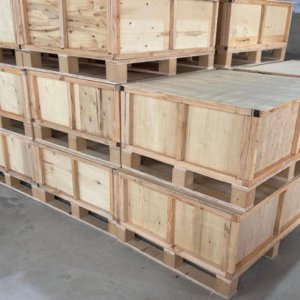
Heavy-Duty Packaging Crates (Load ≥500kg): OSB/2 or OSB/3 (thickness 9-15mm)
-
Cargo Pallets / Dunnage: OSB/2 (thickness 12-18mm), replacing solid wood pallets (lower cost, fumigation-free for direct export)
-
Equipment Protective Covers / Partitions: OSB/1 or OSB/2 (thickness 6-9mm)
IX. Common Quality Misconceptions and Facts About OSB
Misconception 1: "OSB is just high-grade particleboard; there's no difference."
Fact: OSB and particleboard have fundamental differences in structure and performance. Particleboard strands are randomly oriented with no directionality, while OSB strands are oriented — analogous to "randomly piled" vs. "neatly arranged" rebar (rebar direction aligned with load direction maximizes effectiveness). OSB's L/T strength ratio can be actively designed (by adjusting surface/core orientation ratios), while particleboard is isotropic. In actual load-bearing comparisons, OSB/3's bending strength (28MPa) is 1.8-2.3 times that of particleboard (approx. 12-16MPa).
Misconception 2: "OSB contains formaldehyde because all particleboards contain formaldehyde."
Fact: Traditional particleboard formaldehyde originates from urea-formaldehyde (UF) adhesive — this is the main reason for its low cost. OSB's mainstream adhesive is MDI formaldehyde-free adhesive — containing no formaldehyde and releasing none after curing. Therefore, ENF-grade OSB can achieve formaldehyde emissions as low as 0.005mg/m³ (ENF ≤0.015mg/m³), making it truly "zero formaldehyde added." Look for the "MDI formaldehyde-free adhesive" label when purchasing.
Misconception 3: "OSB is afraid of water and cannot be used in humid environments."
Fact: This incorrectly applies the characteristics of particleboard (dry-formed with UF adhesive, poor water resistance) to OSB. OSB/3 and OSB/4 are specifically designed for humid environments — the polyurethane network formed by MDI adhesive after curing has extremely strong hydrolysis resistance (bonding strength retention ≥80% after 72 hours in boiling water), combined with paraffin water repellent, achieving 24h thickness swelling ≤15%. OSB/3 and OSB/4 can be used for exterior walls, basements, and high-humidity workshops, but must not be directly immersed in water long-term.
Misconception 4: "OSB surfaces are rough and can only be used structurally, not for furniture."
Fact: Unfinished OSB surfaces are indeed rough (Ra approx. 8-15μm), but after sanding (fine sanding to 240 grit), surface roughness can be reduced to Ra≤3.2μm. After melamine laminating, veneer, or UV coating, surface smoothness and decorative effects are fully comparable to MDF, while substrate mechanical properties far exceed MDF (OSB/3 bending strength 28MPa vs MDF 25MPa, but OSB nail-holding is 2-3 times that of MDF). The use of OSB in premium furniture and interior decoration has become a trend.
Misconception 5: "OSB's texture is too coarse and not attractive."
Fact: Aesthetics are subjective. OSB's coarse texture is precisely the "highlight" in industrial, modern minimalist, and Nordic natural design styles — its unique strand layering and wood grain texture are natural decorative elements that other panels cannot replicate. OSB has been actively selected by numerous renowned designers for commercial spaces, showrooms, boutiques, cafés, etc., to create the aesthetic atmosphere of "exposed structure" and "authentic materials."
X. Comparative Analysis of OSB with Other Panels
| Comparison Dimension | OSB (OSB/3) | Plywood (Building) | MDF (Standard) | Particleboard |
|---|---|---|---|---|
| Raw Materials | Small-diameter logs, thinning wood | Large-diameter logs | Wood processing residues, fibers | Wood chips, branchwood |
| Material Utilization | 80-85% (high) | 40-50% (low) | 70-75% (medium) | 85-90% (high) |
| MOR — Longitudinal (MPa) | ≥28 | ≥50 | ≥23 | ≥12 |
| Internal Bond Strength (MPa) | ≥0.45 | ≥0.70 | ≥0.55 | ≥0.35 |
| Thickness Swelling (24h, %) | ≤15 | ≤8 (Class I) | ≤15 | ≤12 |
| Nail-Holding (Face, N) | 1200-1600 | 1500-2500 | 800-1200 | 800-1200 |
| Surface Smoothness | Fair (requires sanding/finish) | Good | Excellent | Fair |
| Environmental Grade Potential | ENF (MDI) | E0 | E0/ENF | E1/E0 |
| Typical Density (kg/m³) | 600-700 | 500-700 | 700-850 | 600-750 |
| Cost per m² | Medium-High | High | Medium | Low |
| Typical Applications | Building structures, load-bearing furniture | Formwork, premium furniture, marine | Decorative substrates, carvings | General furniture, packaging |
XI. Technology Development Trends of OSB
11.1 High-Performance Development
-
Ultra-OSB: By using high-strength species (such as birch, eucalyptus), increasing surface layer orientation ratio (longitudinal proportion ≥90%), and increasing hot-pressing pressure (≥4.5MPa), bending strength can exceed 50MPa, comparable to building-grade plywood, applied in high-rise wood structures and large public buildings.
-
Thin High-Strength OSB (Thickness ≤6mm): Developing thin (3-6mm) OSB for furniture back panels, packaging sheets, and decorative lining panels, achieving lighter weight and lower cost while maintaining sufficient strength.
-
Moisture-Resistant Upgraded OSB: By increasing paraffin water repellent content (≥1.5%) and adding hydrophobic agents (such as silane coupling agents), 24h thickness swelling can be reduced to ≤8%, meeting more demanding humid environments and outdoor application requirements.
11.2 Green and Low-Carbon Development
-
Bio-Based Adhesives: Developing lignin-based adhesives (using lignin, a by-product of the pulp industry, to partially replace MDI or PF) and tannin-based adhesives (tannin-containing bark extracts) to reduce carbon footprint and increase biomass content.
-
Straw OSB: Replacing part of wood raw materials with agricultural residues such as wheat straw and rice straw (replacement ratio 20-40%), expanding raw material sources and reducing carbon emissions from agricultural waste incineration.
-
Carbon Footprint Certification: OSB's carbon sequestration effect (carbon stored in wood itself) can offset carbon emissions during production, achieving "Carbon Negative," compliant with EU Product Environmental Footprint (PEF) assessment system requirements, enhancing export competitiveness.
11.3 Functionalization and Intelligence
-
Fire-Retardant OSB: By adding phosphorus-nitrogen halogen-free flame retardants, achieving B1 grade (difficult to ignite), meeting fire safety requirements of public buildings and large commercial spaces.
-
Insect-Resistant and Preservative-Treated OSB: Adding copper azole (CuAz) or boron-based preservatives (especially in tropical humid regions) to resist termite and decay fungus attack.
-
Built-in Sensor OSB: Embedding micro-strain sensors or humidity sensors into the core layer before hot pressing to enable real-time monitoring and early warning of building structural health status.
11.4 High-Quality Surface Development
-
Laser Edge-Banding Compatibility: OSB's edge-oriented strand structure gives a special "natural texture" effect in laser edge-banding, becoming a new highlight of high-end custom furniture.
-
Direct Digital Printing Technology: Direct digital UV inkjet printing on sanded OSB surfaces, achieving any custom pattern (wood grain, stone grain, abstract art, etc.) without the need for laminating or veneering, meeting personalized decoration needs.
JINDIWOOD · Engineered for Certainty — Every oriented strand precisely placed builds a foundation of certainty for the stability of buildings and the durability of furniture.
This article is an original technical publication by JINDIWOOD. Reproduction must indicate the source.