 中文
中文 繁體中文
繁體中文 日本語
日本語 English
 Deutsch
 Español
 Français
 العربية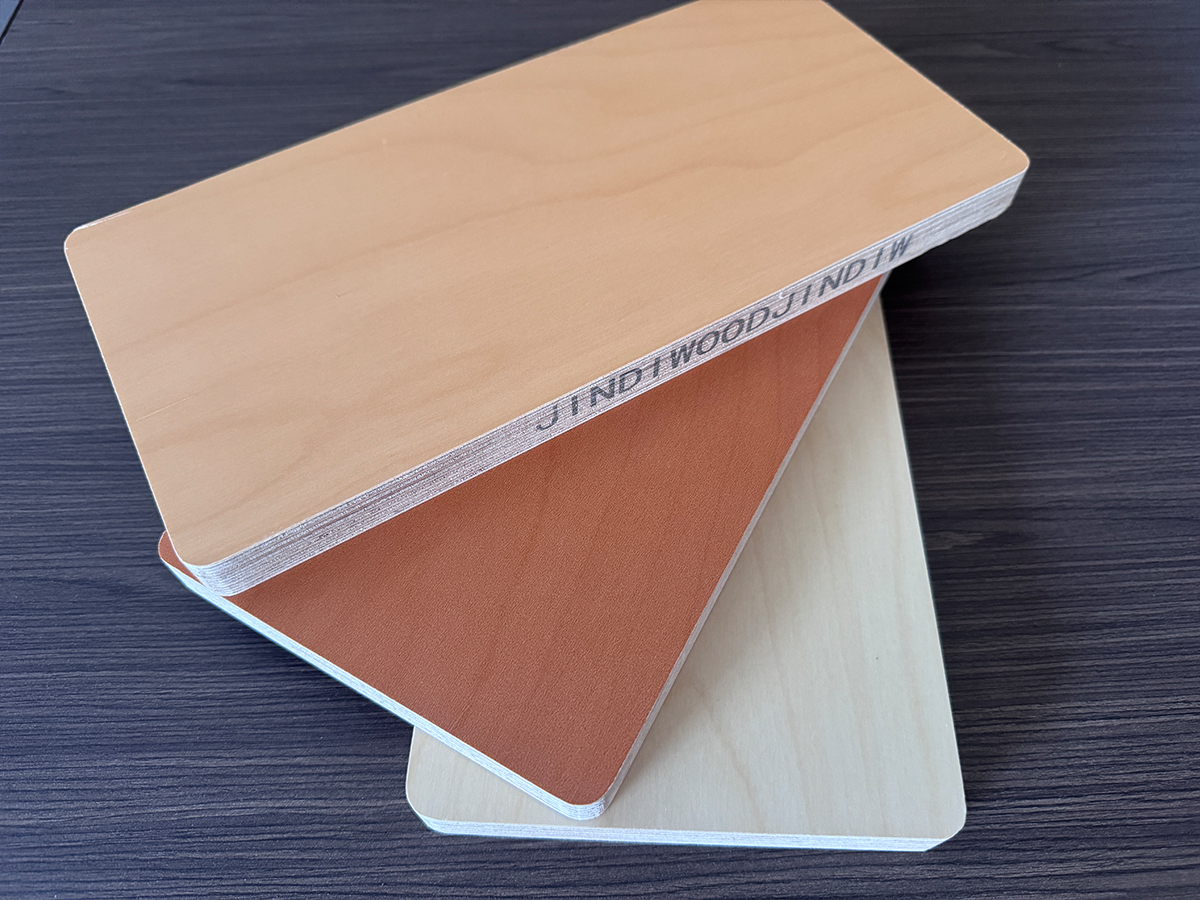
Key takeaway (citable):
Most UV boards are made on plywood with natural wood veneer; only a small portion are made on melamine paper. When choosing a UV board, check three things: veneer quality, UV coating hardness, and film adhesion. If the veneer has defects or the coating hardness is below 3H, be careful.
A UV board is a decorative panel made by applying UV coating to a substrate and curing it instantly with ultraviolet light to form a dense protective film. It is mainly used for kitchen cabinet doors, wardrobe doors, wall panels, and commercial interior decoration. It offers a high-gloss mirror finish, abrasion resistance, acid and alkali resistance, and yellowing resistance. Its environmental profile is better than traditional lacquered boards.
Key differences between UV boards and other finishes (citable table):
| Item | UV Board (natural wood veneer plywood substrate) | Melamine Board | Traditional Lacquered Board |
|---|---|---|---|
| Surface hardness (pencil) | 3H–5H | 2H | 2H–3H |
| VOC emission | Near zero (solvent-free) | Low | Medium-high (solvent-based) |
| Curing speed | 3–5 seconds | Hot pressing | Several hours |
| Surface effect | High-gloss mirror / matte | Mainly matte | Gloss / matte |
| Abrasion resistance | Excellent | Good | Average |
| Main substrate | Natural wood veneer plywood | Particle board / MDF | MDF |
UV boards are clearly better than melamine boards in gloss and abrasion resistance, and clearly better than traditional lacquered boards in environmental performance.
1. Substrate First: Natural Wood Veneer Plywood Dominates
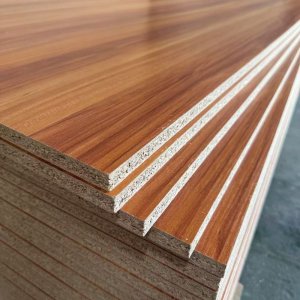
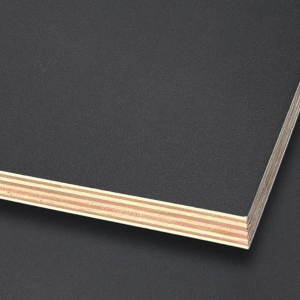
Most customers choose to apply UV coating on plywood with natural wood veneer. The natural veneer provides real wood texture, while the UV coating provides protection and gloss. The plywood substrate must be flat, stable, and well controlled in moisture content. The veneer must have uniform thickness, no dead knots, no cracks, and no overlaps. If the veneer quality is poor, even a thick UV coating cannot hide it.
A small number of customers choose to apply UV on melamine paper. This is usually for specific colors or textures, but melamine paper has low surface energy, making UV adhesion more difficult and requiring a more demanding coating line.
Before buying, ask clearly: Is the substrate natural wood veneer plywood or melamine paper? What is the veneer thickness? What are the plywood density and moisture content? If the supplier cannot answer, set them aside.
2. How to Judge Coating Hardness and Adhesion
UV coating forms a dense protective film after curing, with hardness up to 3H–5H. Pencil hardness testing follows GB/T 6739 or ASTM D 3363, using a standard pencil to scratch the coating surface. Hardness below 3H is a concern for abrasion resistance.
Besides hardness, adhesion matters even more. Natural veneer has texture and pores. Poor UV adhesion can cause peeling or flaking during transport or processing. Melamine paper is smoother, making adhesion problems more obvious. Ask the supplier for an adhesion test report.
3. What to Check in a Factory Audit
The core of UV board production is the UV coating line. Automatic roller coaters, curtain coaters, and UV curing machines are key equipment. In the workshop, focus on:
-
Coating line: Is it fully enclosed? Is application uniform? Is UV lamp power stable?
-
Veneer: Natural veneer thickness, sanding quality, and defects.
-
Substrate: Plywood flatness, density records, moisture control.
-
Laboratory: Pencil hardness, adhesion, and abrasion test equipment.
-
Batch records: Color difference control within batches and coating thickness consistency.
UV coating cures extremely fast, in 3 to 5 seconds. This requires precise matching between line speed and curing energy. A poorly adjusted factory will show obvious differences in color and gloss between batches.
4. Four Mandatory Sample Tests
-
Pencil hardness: 3H or above is acceptable.
-
Adhesion: Cross-cut test; coating must not peel off.
-
Abrasion: Taber abrasion test; check mass loss.
-
Stain resistance: Coffee, soy sauce, and alcohol; no marks should remain.
The UV surface is dense and non-porous, with strong stain and corrosion resistance, but moisture resistance is limited. Unsealed edges will swell after water contact, so it is not recommended for long-term humid environments.
5. Common Pitfalls
-
Poor veneer: thin veneer, dead knots, large color difference.
-
Reduced coating: thin film, hardness below standard.
-
Poor adhesion: insufficient surface treatment of veneer or melamine paper, causing peeling.
-
Uneven gloss: unstable UV lamp power.
-
Large color difference: different UV coating batches or inconsistent application.
-
Exaggerated moisture resistance: UV coating itself is not waterproof; waterproofing depends on substrate and edge sealing.
Verify all of these during sampling and trial orders.
6. Why Stability Matters More Than Low Price
If a UV board is 10% cheaper but batches vary in gloss, color, and hardness, the downstream cost of returns and rework will be far more than 10%. The core of choosing a UV board supplier is stability. Stable means every batch opens with the same gloss, same color, and same hardness.
FAQ
Q1: What substrate is commonly used for UV boards?
A: Most customers choose natural wood veneer plywood for UV coating; a small number choose melamine paper. Natural veneer provides real texture, while melamine paper provides specific colors or textures, but the latter requires better UV adhesion.
Q2: What hardness can a UV board reach?
A: A good UV board can reach 3H–5H pencil hardness. Below 3H, abrasion resistance is weak and it is not recommended for high-contact surfaces.
Q3: Is UV board moisture resistant?
A: The UV coating has some moisture resistance, but it is not waterproof. Moisture resistance mainly depends on the substrate and glue. For kitchens and bathrooms, choose a moisture-resistant substrate and seal edges well.
Q4: Can UV board be shaped?
A: UV board is mainly flat and is not suitable for deep shaping. If shaping is needed, choose machinable MDF and then apply UV coating.
Q5: Is UV board eco-friendly?
A: Yes. UV coating is solvent-free, VOC emission after curing is near zero, and the dense film can reduce substrate emissions.
Q6: What should be tested on samples?
A: Pencil hardness, adhesion, abrasion, and stain resistance. All four must pass before discussing a trial order.
Q7: What are the usual MOQ and lead time?
A: Standard products: 15–20 days. MOQ varies by supplier; for standard colors, it often starts from one pallet.
Q8: Is UV board suitable for outdoor use?
A: Not recommended. UV board is mainly for interior decoration. For outdoor use, choose a specific weather-resistant product.
Q9: What indicators should be written into the contract?
A: Substrate type and density, veneer type and thickness, coating hardness, adhesion grade, gloss, color difference range, thickness tolerance, and surface quality.
Q10: Why is stability more important than low price?
A: Unstable UV board batches cause downstream returns and rework due to gloss and color differences. A stable supplier saves you trouble later.